Burned Out… Or Just Bored At Work?
23 days ago
6 minute read.

There are days when work feels exciting and meaningful, and then there are days when even the simplest task feels like a chore. You may find yourself counting down the hours until the workday ends, struggling to stay focused, or feeling emotionally exhausted after logging off. Naturally, many people assume they are experiencing burnout.
But what if the problem isn't burnout at all?
An increasing number of professionals are discovering that they are actually dealing with boreout - a lesser-known workplace phenomenon caused by prolonged boredom, lack of challenge, and disengagement. While burnout stems from excessive stress and overwhelming demands, boreout arises when work feels repetitive, unstimulating, or lacking in purpose.
Understanding the difference is important because the solutions are not always the same.
Let's explore how to recognize whether you're burned out or simply bored at work and what you can do to regain motivation.
Also Read: Can AI Predict Mental Burnout Before It Happens?
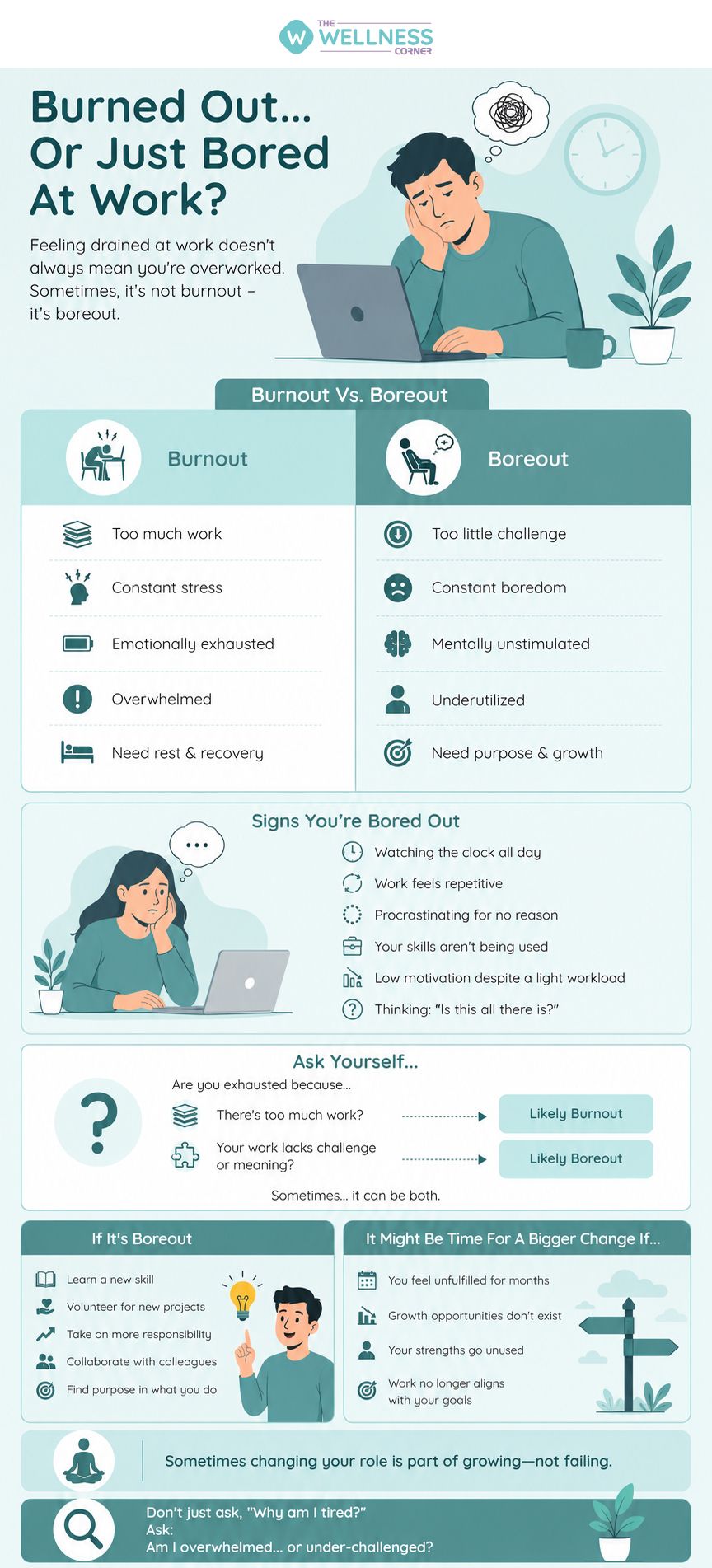
Burnout Vs. Boreout: Understanding The Difference
Burnout and boreout may share certain symptoms, but the factors behind them are quite different.
Burnout is usually associated with:
- Heavy workloads
- Chronic stress
- Long working hours
- Emotional exhaustion
- Feeling overwhelmed
Boreout, on the other hand, often results from:
- Repetitive tasks
- Lack of meaningful work
- Underutilized skills
- Limited opportunities for growth
- Feeling disconnected from your role
Both conditions can affect productivity, job satisfaction, and mental well-being, but identifying the root cause is the first step toward addressing it.
Signs You May Be Experiencing Burnout
Burnout often develops gradually.
Common signs include:
- Feeling emotionally drained
- Constant fatigue, even after rest
- Difficulty concentrating
- Increased irritability
- Reduced motivation
- Feeling overwhelmed by responsibilities
- Physical symptoms such as headaches or muscle tension
Burnout often leads people to keep working despite overwhelming fatigue, which can prolong or worsen their symptoms.
Also Read: Tips To Avoid Burnout During Work From Home

Signs You May Be Experiencing Boreout
Boreout is often overlooked because people assume having less work should feel easier.
Instead, prolonged disengagement can become surprisingly stressful.
Possible signs include:
- Feeling mentally unstimulated
- Frequently watching the clock
- Difficulty staying focused
- Procrastinating unnecessarily
- Feeling that your skills are underused
- Loss of enthusiasm for work
- Low job satisfaction despite manageable workloads
Over time, boredom itself can become emotionally draining.
Why Boreout Can Feel Just As Exhausting?
Many people assume boredom should feel relaxing.
However, meaningful work contributes to motivation, confidence, and personal growth.
When employees repeatedly perform tasks that feel monotonous or unchallenging, they may begin questioning the value of their work.
This lack of purpose can gradually reduce engagement and overall well-being.
Also Read: Feeling Unwell With A Deadline Approaching? A Practical Survival Guide
Why Burnout Happens?
Burnout usually develops when stress becomes constant and recovery time becomes insufficient.
Contributing factors may include:
- Unrealistic deadlines
- Excessive workload
- Poor work-life balance
- Limited organizational support
- High emotional demands
Persistent stress, without proper recovery, may negatively influence both physical and emotional health.

Why Boreout Happens?
Several workplace factors may contribute to boreout.
Examples include:
1. Limited Challenges
When work rarely requires learning new skills or solving problems, employees may gradually lose interest.
2. Lack Of Career Growth
When professional growth opportunities are limited, staying in the same role for years may reduce enthusiasm for work.
3. Repetitive Tasks
Highly repetitive work may eventually decrease engagement, particularly for employees who enjoy variety.
4. Skills Going Unused
People often feel more satisfied when their strengths and abilities are recognized and utilized.
When talents remain underused, motivation may decline.
Can You Experience Both?
Yes.
Many professionals encounter both burnout and boreout at various points in their careers.
Others may even experience aspects of both simultaneously.
For example:
- Heavy administrative work may create stress while offering little intellectual stimulation.
- High workloads involving repetitive tasks may leave employees both exhausted and disengaged.
Every individual's experience is unique.

How To Tell Which One You're Facing?
Ask yourself a few simple questions:
- Do I feel overwhelmed by too much work?
- Or do I feel frustrated because my work lacks meaning?
- Am I mentally exhausted after handling constant pressure?
- Or am I mentally tired because my work rarely challenges me?
Honest self-reflection can provide valuable insight.
Practical Ways To Manage Burnout
If burnout is the primary issue, consider the following strategies.
1. Set Healthy Boundaries
Avoid carrying work into your personal time whenever possible.
Protecting time for rest supports recovery.
2. Prioritize Sleep
Getting enough restful sleep allows both your body and mind to recharge.
Also Read: Is The 8-Hour Sleep Rule A Myth? What Science Really Says?
3. Take Regular Breaks
Brief pauses during the workday can boost focus and help prevent mental exhaustion.
4. Communicate With Your Manager
If workloads have become unmanageable, discussing priorities and expectations may help identify practical solutions.
5. Seek Professional Support
If stress becomes overwhelming or persistent, speaking with a mental health professional can provide valuable guidance.

Practical Ways To Overcome Boreout
If boredom seems to be the bigger challenge, different strategies may be helpful.
1. Look For Learning Opportunities
Consider:
- New certifications
- Online courses
- Skill development programs
- Cross-functional projects
Continuous learning often increases engagement.
2. Ask For New Responsibilities
Discuss opportunities with your manager to:
- Join new initiatives
- Take ownership of projects
- Learn different aspects of the business
Additional challenges may renew interest in your role.
3. Find Meaning In Your Work
Even routine tasks contribute to larger organizational goals.
Understanding how your work creates value may improve motivation.
4. Build Connections
Positive relationships with colleagues often increase workplace satisfaction.
Collaborating with others may also introduce fresh perspectives.
Could A Career Change Be The Right Next Step?
Sometimes the issue extends beyond your current workload.
If you've consistently explored opportunities for growth but remain unfulfilled, it may be worth reflecting on:
- Career goals
- Long-term aspirations
- Personal interests
- Workplace culture
Changing roles or pursuing new career paths is sometimes part of healthy professional growth.
Caring For Your Mental Well-Being
Whether you're experiencing burnout or boreout, emotional well-being deserves attention.
Helpful habits include:
- Regular physical activity
- Balanced nutrition
- Mindfulness practices
- Spending time outdoors
- Maintaining social connections
- Seeking support when needed
Mental health is just as important as physical health.
Final Thoughts
Feeling disconnected from work doesn't always mean you're burned out. Sometimes, what feels like exhaustion is actually the emotional weight of prolonged boredom and lack of purpose.
Recognizing the difference between burnout and boreout allows you to choose strategies that truly address the underlying problem. Whether you need more rest, better boundaries, greater challenges, or fresh opportunities to grow, small changes can make a meaningful difference.
Your work should support not only your career but also your overall well-being. Paying attention to how you feel is an important first step toward creating a healthier and more fulfilling professional life.
Prioritize Workplace Well-Being With The Wellness Corner
Work can be demanding, but your health should never take a back seat. From stress management and mental well-being to nutrition, fitness, preventive healthcare, and healthy lifestyle habits, The Wellness Corner offers expert-backed guidance to help you thrive both personally and professionally.
Frequently Asked Questions (FAQs)
Leave a Comment

Sign-Up Now & Unlock
₹100 Cashback
Recently Published
Related Articles


Health Checks @ Home
Service
Explore



Follow us on:


© 2026 Truworth Health Technologies Pvt. Ltd.