Common Exercises To Avoid When You Have Back Pain
3 months ago
6 minute read.

Back pain is among the most frequently reported health concerns across the globe. Whether it develops after sitting for long hours, lifting something heavy, exercising incorrectly, or because of an underlying medical condition, back pain can interfere with daily life and make even simple activities uncomfortable.
When discomfort begins, many people assume that complete rest is the best solution. Others do the opposite and continue exercising without making any adjustments, hoping to "push through the pain."
The truth lies somewhere in between.
Staying active is often beneficial for recovery, but certain exercises may worsen back pain if they place unnecessary stress on the spine or surrounding muscles. Knowing which movements to avoid - and what to do instead - can help you recover safely while maintaining your fitness.
Let's explore the exercises that may aggravate back pain and learn safer alternatives that support spinal health.
Also Read: Try Sleeping In These Positions To Reduce Your Back Pain
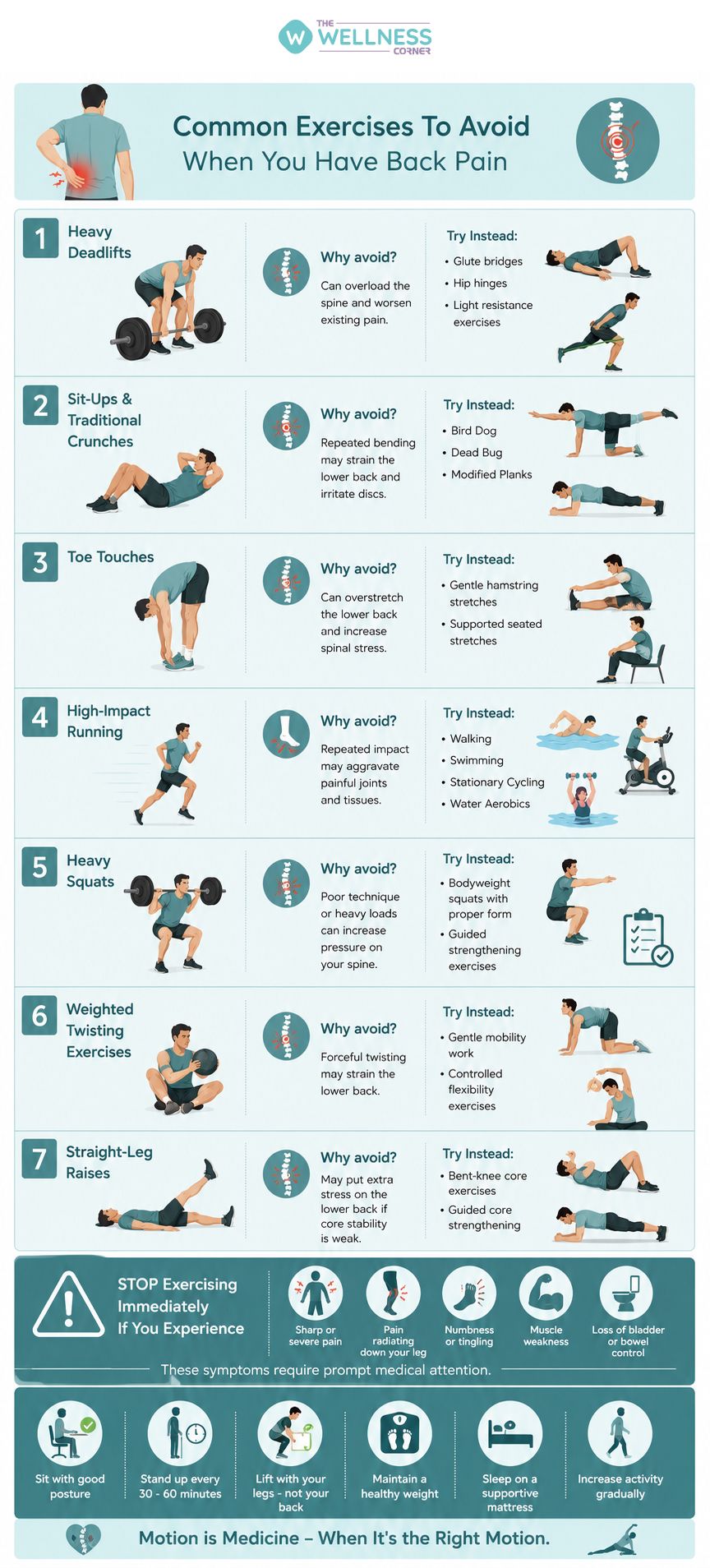
Should You Exercise With Back Pain?
In many cases, yes.
For most people, gentle movement helps:
- Improve flexibility
- Strengthen supporting muscles
- Reduce stiffness
- Promote circulation
- Support recovery
However, the type of exercise matters.
If an activity increases pain significantly or causes symptoms to spread down the legs, it should be stopped and discussed with a healthcare professional.
Not All Back Pain Is The Same
Before changing your exercise routine, remember that back pain has many possible causes, including:
- Muscle strain
- Poor posture
- Disc-related problems
- Arthritis
- Nerve irritation
- Osteoporosis
- Sports injuries
Because the underlying cause differs from person to person, exercise recommendations should also be individualized.
Also Read: Anatomy Of Your Posture At Work
1. Heavy Deadlifts
Deadlifts can be excellent strength-building exercises when performed with proper technique.
However, lifting heavy weights while experiencing back pain may increase pressure on the spine and surrounding muscles.
Poor form further increases the risk of injury.
Consider Instead
- Bodyweight hip hinges
- Glute bridges
- Supervised strengthening exercises
- Light resistance training recommended by a physiotherapist

2. Sit-Ups And Traditional Crunches
Many people believe endless sit-ups strengthen the core.
In reality, repeated spinal flexion during traditional crunches may aggravate certain types of back pain, particularly in people with disc-related conditions.
Better Alternatives
Core exercises that maintain a neutral spine are often preferred.
Examples include:
- Modified planks
- Bird dog exercises
- Dead bug exercises
These exercises strengthen the core while reducing unnecessary spinal strain.
Also Read: Can Abdominal Crunches Reduce Waistline?
3. Toe Touches
Standing toe touches may overstretch already irritated back muscles while increasing pressure on certain spinal structures.
People with lower back pain often compensate by rounding their backs excessively.
Safer Option
Gentle hamstring stretches performed while lying down or sitting with proper support may provide better results.

4. High-Impact Running
Running offers many health benefits.
However, high-impact activities may temporarily worsen symptoms for individuals with certain back conditions.
Repeated impact can place additional stress on painful joints or irritated tissues.
Lower-Impact Options
Consider activities such as:
- Walking
- Swimming
- Stationary cycling
- Water aerobics
These exercises maintain cardiovascular fitness while reducing spinal impact.
5. Heavy Squats
Squats themselves are not harmful.
The concern arises when:
- Heavy weights are used
- Technique is poor
- Existing back pain is ignored
Improper squatting mechanics may increase spinal loading unnecessarily.
Also Read: Does Genetics Affect How You Squat?
What To Try?
Bodyweight squats performed with correct form may be appropriate for some individuals after professional guidance.
6. Twisting Movements With Resistance
Exercises involving forceful twisting under load may increase stress on the lower back.
Examples include:
- Heavy Russian twists
- Rotational weightlifting movements
- Sudden twisting exercises
These may not be suitable during episodes of active back pain.
Better Choice
Gentle mobility exercises supervised by qualified professionals often provide safer alternatives.
7. Straight-Leg Lifts
Straight-leg raises performed while lying flat may place additional strain on the lower back, particularly if core stability is limited.
Alternative
Bent-knee exercises and guided core strengthening may be more comfortable while recovery progresses.
Warning Signs To Stop Exercising
Not every ache requires stopping immediately.
However, exercise should be discontinued if you experience:
- Sharp pain
- Pain spreading down the leg
- Numbness
- Tingling
- Weakness
- Loss of bladder or bowel control
- Severe worsening of symptoms
These symptoms require prompt medical evaluation.
Also Read: 5 Exercising Mistakes That Can Increase Anxiety (Instead Of Reducing It)

What Exercises Usually Help?
Many people with back pain benefit from exercises that improve stability rather than placing excessive strain on the spine.
Examples include:
1. Walking
Walking improves circulation, reduces stiffness, and encourages gentle movement.
2. Swimming
Water supports body weight, making movement easier while reducing joint stress.
3. Core Strengthening
Strong core muscles provide support for the spine.
Examples include:
- Bird dog
- Dead bug
- Modified plank
These should be performed with proper technique.
4. Stretching
Gentle stretching may improve flexibility in:
- Hamstrings
- Hip flexors
- Glutes
Avoid aggressive stretching that increases pain.
5. Yoga And Pilates
Certain yoga and Pilates exercises may support posture, flexibility, and core strength.
However, modifications are often necessary depending on the cause of back pain.
Professional guidance is recommended.
Everyday Habits That Support Recovery
Exercise is only one part of managing back pain.
Daily habits also matter.
1. Improve Posture
Maintain good posture while:
- Sitting
- Standing
- Working
- Driving
Small adjustments throughout the day can reduce unnecessary spinal stress.
2. Avoid Sitting Too Long
Prolonged sitting often contributes to stiffness.
Try to get up, stretch, or take a short walk every 30 to 60 minutes.
3. Lift Objects Properly
Use your legs instead of bending from your waist.
Keep heavy objects close to your body while lifting.
4. Maintain A Healthy Weight
Extra body weight can add more load to your back and spine.
Healthy nutrition combined with regular activity supports overall spinal health.
5. Sleep Comfortably
A supportive mattress and comfortable sleeping position may reduce morning stiffness for some people.
When Should You See A Healthcare Professional?
Seek medical evaluation if:
- Pain persists beyond several weeks
- Symptoms worsen
- Daily activities become difficult
- You develop numbness or weakness
- Pain follows a serious injury
An early assessment can help uncover what's causing your back pain and guide effective treatment decisions.
Recovery Takes Time
One of the biggest mistakes people make is returning to intense exercise too quickly.
Recovery varies depending on:
- The cause of pain
- Individual health
- Fitness level
- Treatment plan
Gradually increasing activity often leads to better long-term outcomes than rushing back into strenuous workouts.

Final Thoughts
Back pain doesn't always mean you need to stop exercising completely. In fact, appropriate movement often supports recovery. The key is choosing exercises that strengthen and protect the spine instead of placing additional strain on already sensitive structures.
Avoiding high-impact activities, heavy lifting, repetitive spinal bending, and forceful twisting during painful episodes can help prevent symptoms from worsening. At the same time, gentle walking, swimming, core strengthening, stretching, and professionally guided exercise programs often support long-term spinal health.
Listening to your body, progressing gradually, and seeking expert guidance when needed can help you stay active while protecting your back.
Move Safely With The Wellness Corner
Managing back pain involves more than avoiding certain exercises. Proper movement, posture, nutrition, preventive care, mental well-being, and healthy lifestyle habits all contribute to better recovery and long-term spine health.
The Wellness Corner offers expert-backed guidance on fitness, physiotherapy support, nutrition, preventive healthcare, and overall wellness to help you move with confidence.
Frequently Asked Questions (FAQs)
Leave a Comment

Sign-Up Now & Unlock
₹100 Cashback
Subscribe to our Newsletter!
Get a weekly dose of wellness tips delivered straight to your inbox.
Recently Published
Related Articles


Health Checks @ Home
Service
Explore



Follow us on:


© 2026 Truworth Health Technologies Pvt. Ltd.