How To Let Go Of Emotional Tension Held In The Body?
8 hours ago
6 minute read.

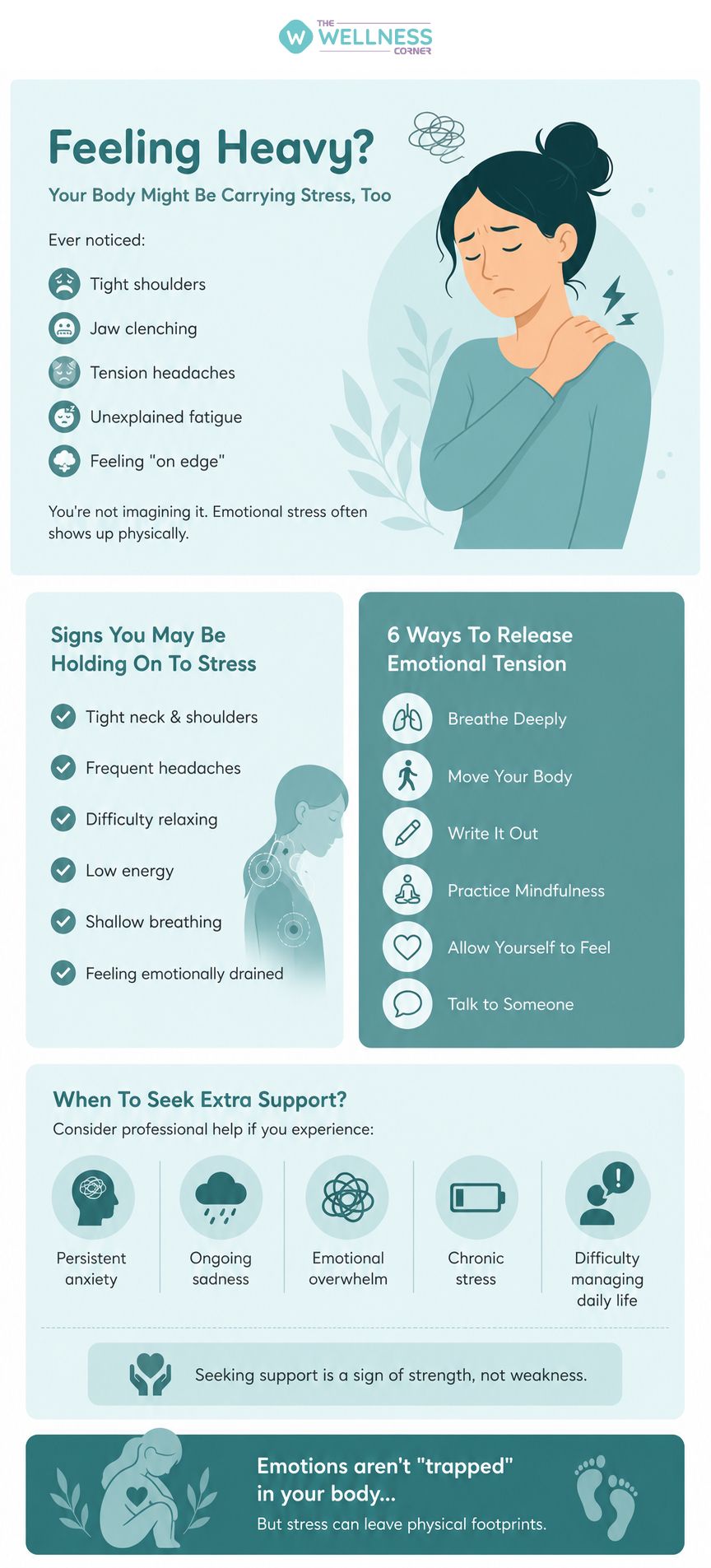
Have you ever noticed your shoulders tightening after a stressful conversation? Or felt a knot in your stomach when you're anxious, even when you can't explain why? Perhaps you've experienced unexplained fatigue, tension headaches, jaw clenching, or a persistent feeling of heaviness that doesn't seem to have a physical cause.
Many people think emotions exist only in the mind. However, our emotional experiences often affect the body as well. Stress, grief, anger, fear, disappointment, and even excitement can trigger physical reactions. When emotions are not fully processed, the body may continue carrying the effects long after the original situation has passed.
While the phrase "trapped emotions" is often used in wellness conversations, it is important to understand that emotions are not literally stored inside muscles or organs. Rather, unresolved emotional experiences can influence muscle tension, posture, breathing patterns, nervous system activity, and overall well-being.
The good news is that there are healthy, evidence-informed ways to reconnect with your body, process emotions, and create space for emotional release.
Also Read: How Does Emotional Disbalance Affect Your Muscles?
Understanding The Mind-Body Connection
The body and mind constantly communicate with one another.
When you experience stress, your brain signals the release of hormones such as cortisol and adrenaline. Their release signals the body to become more alert and prepared for action.
You may notice:
- Faster heartbeat
- Muscle tension
- Shallow breathing
- Increased alertness
- Digestive changes
While these responses are useful during short-term challenges, chronic stress can keep the body in a prolonged state of tension.
Over time, emotional strain may contribute to:
- Neck and shoulder tightness
- Headaches
- Fatigue
- Sleep disturbances
- Digestive discomfort
- Reduced energy levels
Learning to release physical tension can often support emotional well-being as well.
Signs You May Be Holding Emotional Stress In Your Body
Everyone experiences emotions differently, but some common signs include:
1. Persistent Muscle Tension
Many people unconsciously hold stress in areas such as:
- Neck
- Shoulders
- Jaw
- Lower back
Also Read: Steps To Take For Shoulder Pain Relief
2. Difficulty Relaxing
You may feel constantly "on edge" even when there is no immediate problem.
3. Unexplained Fatigue
Emotional stress can be mentally and physically exhausting.
4. Frequent Headaches
Stress-related tension often contributes to headaches and migraines.
5. Changes In Breathing Patterns
Anxiety and emotional overwhelm may lead to shallow or restricted breathing.
Becoming aware of these signals is often the first step toward finding effective solutions.

Why Suppressing Emotions Can Be Challenging?
Many people learn from an early age to hide difficult emotions.
Common messages include:
- "Stay strong."
- "Don't cry."
- "Move on."
- "Keep it together."
While emotional regulation is important, repeatedly ignoring emotions may prevent healthy processing.
Suppressing emotions does not necessarily make them disappear. Instead, they may continue influencing thoughts, behaviors, stress levels, and physical well-being.
Creating safe opportunities to acknowledge emotions can support both mental and physical health.
Also Read: The Morning Habit That’s Secretly Spiking Your Stress Hormones
Start With Awareness
Before emotions can be processed, they must first be recognized.
Pause briefly and take stock of how you're feeling.
Ask:
- What am I feeling right now?
- Where do I notice tension in my body?
- What situations have been affecting me recently?
You do not need to immediately solve every emotion.
Simply becoming aware of your internal experience can reduce emotional resistance and increase self-understanding.
Use Deep Breathing To Calm The Nervous System
Breathing is one of the most powerful tools for regulating emotional stress.
Feelings of anxiety or overwhelm can cause breathing to become:
- Rapid
- Shallow
- Restricted
Slow, mindful breathing helps the body recognize that it is safe to relax.
Also Read - Deep Breathing & Techniques To Relieve Anxiety: Learn How To Do It Right!
Try this simple exercise:
- Inhale slowly through your nose for four counts.
- Hold briefly
- Exhale gently for six counts.
- Repeat several times.
Many people notice a reduction in physical tension after only a few minutes.

Move Your Body
Physical movement can help release accumulated stress and tension.
Movement does not need to be intense.
Helpful options include:
1. Walking
A simple walk can improve mood and reduce mental overwhelm.
2. Stretching
Gentle stretching helps relax tight muscles and increase body awareness.
3. Yoga
Yoga combines movement, breathing, and mindfulness, making it particularly helpful for stress management.
4. Dancing
Free movement can encourage emotional expression and promote feelings of freedom and joy.
The goal is not perfection. The goal is creating movement and connection with your body.
Express Your Emotions Through Writing
Journaling provides a safe space for emotional expression.
You might write about:
- Current feelings
- Recent experiences
- Unresolved concerns
- Personal reflections
There are no rules.
You do not need perfect grammar or structure.
Writing can help organize thoughts and reduce the mental burden of carrying emotions internally.
Also Read: Benefits Of Expressive Writing
Practice Mindfulness
The essence of mindfulness lies in noticing your current experience without trying to evaluate or change it.
Instead of trying to push emotions away, mindfulness encourages you to observe them with curiosity.
For example:
Rather than thinking:
"I shouldn't feel this way."
Try:
"I notice that I'm feeling anxious right now."
This small shift can reduce emotional resistance and create greater self-compassion.

Allow Yourself To Feel
One of the most effective ways to process emotions is simply allowing them to exist.
Many people fear that acknowledging difficult emotions will make them stronger.
In reality, emotions often become easier to manage when they are recognized and accepted.
Give yourself permission to:
- Feel sad
- Feel frustrated
- Feel disappointed
- Feel uncertain
Emotions are part of being human.
Accepting them does not mean becoming overwhelmed by them.
Connect With Someone You Trust
Emotional release does not always happen alone.
Talking with a trusted person can help you:
- Gain perspective
- Feel supported
- Process difficult experiences
- Reduce feelings of isolation
Support may come from:
- Friends
- Family members
- Mentors
- Mental health professionals
Human connection remains one of the most powerful tools for emotional healing.

Prioritize Rest And Recovery
Emotional stress places demands on the body.
Recovery requires:
1. Quality Sleep
Aim for consistent, restorative sleep whenever possible.
2. Balanced Nutrition
Nourishing foods support overall mental and physical well-being.
3. Relaxation Time
Allow space for activities that help you recharge and feel grounded.
Recovery is not a luxury. It is an essential part of emotional resilience.
When Professional Support May Help?
Sometimes emotional experiences become difficult to manage independently.
Consider seeking professional support if you experience:
- Persistent anxiety
- Ongoing sadness
- Chronic stress
- Emotional overwhelm
- Difficulty functioning in daily life
Mental health professionals can provide evidence-based tools and support tailored to your individual needs.
Recognizing when you need support is a sign of emotional strength.
Final Thoughts
While emotions are not literally trapped inside the body, emotional stress can influence physical health in meaningful ways. The tension in your shoulders, the heaviness in your chest, or the fatigue you feel may sometimes reflect the body's response to ongoing emotional strain.
Learning to reconnect with your body through movement, breathing, mindfulness, self-expression, and supportive relationships can help create opportunities for emotional release and healing.
You do not need to eliminate every difficult emotion. Instead, focus on developing a healthier relationship with your emotional experiences.
Consistent small actions can lead to meaningful improvements over time.

Support Your Emotional Well-Being With The Wellness Corner
Emotional health is closely connected to physical wellness, productivity, relationships, and overall quality of life. Building healthy coping skills and emotional resilience can help you navigate life's challenges more effectively.
The Wellness Corner offers expert-backed resources on mental well-being, stress management, mindfulness, fitness, nutrition, preventive healthcare, and healthy lifestyle practices to support your overall wellness journey.
Frequently Asked Questions (FAQs)
Leave a Comment

Sign-Up Now & Unlock
₹100 Cashback
Subscribe to our Newsletter!
Get a weekly dose of wellness tips delivered straight to your inbox.
Recently Published
Related Articles


Health Checks @ Home
Service
Explore



Follow us on:


© 2026 Truworth Health Technologies Pvt. Ltd.