How To Manage Expectations And Pressure During Appraisal Week?
3 months ago
6 minute read.

Performance appraisal season often brings a mix of emotions. For some employees, it is a time of excitement and anticipation. For others, it can trigger anxiety, self-doubt, and stress. Questions such as "Will I get the rating I expect?", "Will my efforts be recognized?", or "What if the feedback is not what I hoped for?" can dominate thoughts throughout the week.
The reality is that appraisal discussions are an important part of professional growth, but they can also place significant emotional pressure on individuals. Expectations, workplace competition, financial considerations, and career aspirations often become intertwined, making appraisal week feel more intense than usual.
The good news is that while you cannot control every outcome, you can control how you prepare, respond, and manage your mindset. By approaching appraisal conversations with clarity, emotional balance, and realistic expectations, you can reduce stress and make the experience more productive.
Let's explore practical strategies that can help you navigate appraisal week with confidence.
Also Read: Coping With A Negative Appraisal
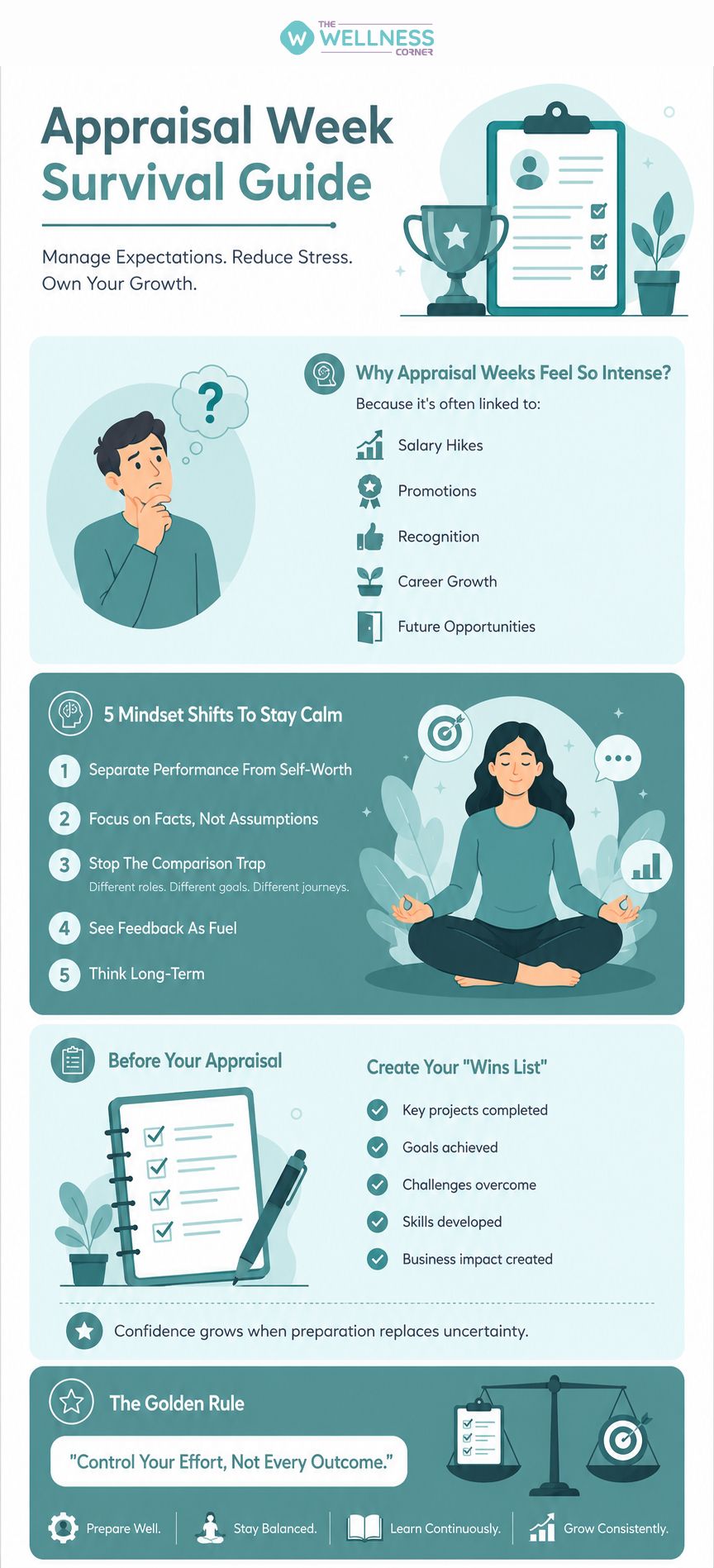
Why Appraisal Week Feels So Stressful?
Performance reviews are not just about numbers or ratings. They often influence how people view themselves professionally.
Appraisal discussions may affect:
- Salary increments
- Promotions
- Career progression
- Recognition and validation
- Professional confidence
- Future opportunities
Because so much appears to be at stake, it is natural to feel nervous. Understanding that these emotions are common can help normalize the experience rather than viewing them as a sign of weakness.
Separate Performance From Personal Worth
One of the biggest mistakes employees make is linking appraisal outcomes directly to their self-worth.
A rating reflects performance within a specific role and time period. It does not define your intelligence, value, potential, or future success.
Even highly successful professionals receive constructive feedback throughout their careers.
Remind yourself:
- A review evaluates work, not character.
- Feedback creates opportunities for growth.
- Career development is a long-term journey.
Maintaining this perspective can help reduce emotional reactions during appraisal discussions.
Also Read: How To Handle Career Setbacks: Bouncing Back After A Missed Opportunity

Focus On Facts, Not Assumptions
Many people spend appraisal week imagining worst-case scenarios.
Common thoughts include:
- "My manager probably thinks I underperformed."
- "What if my compensation increase falls short of what I expected?"
- "Everyone else will receive better ratings."
The problem is that these assumptions are often based on fear rather than evidence.
Instead of guessing outcomes:
- Review your achievements objectively.
- Document completed projects.
- Reflect on positive feedback received throughout the year.
- Consider measurable contributions.
Facts provide a more balanced perspective than speculation.
Prepare Your Accomplishments In Advance
One of the best ways to reduce appraisal anxiety is preparation.
Create a summary of:
- Key projects completed
- Goals achieved
- Skills developed
- Challenges overcome
- Positive outcomes generated
- Contributions to team success
Having a clear record of your accomplishments helps you enter conversations with greater confidence and ensures important achievements are not overlooked.
Also Read: Fear Of Being Successful! Overcome It Before It Hinders Your Goals

Set Realistic Expectations
Ambition is valuable, but unrealistic expectations often create unnecessary disappointment.
Before appraisal discussions:
Ask yourself:
- Have I met most of my objectives?
- How has the organization performed overall?
- What factors influence appraisal decisions?
- Am I comparing myself fairly?
A realistic perspective allows you to approach outcomes more objectively.
This does not mean lowering your standards. It simply means recognizing that many factors influence appraisal decisions beyond individual effort alone.
Don't Let Comparisons Take Over
During appraisal season, workplace comparisons often intensify.
You may wonder:
- Who received the highest rating?
- Who got promoted?
- Who received a larger salary increase?
While comparisons are tempting, they rarely improve well-being.
Every employee has:
- Different responsibilities
- Different goals
- Different managers
- Different business priorities
Your career path is unique. Focusing excessively on others can distract you from your own growth and achievements.

Prepare For Constructive Feedback
Most performance reviews include areas for improvement.
Instead of viewing feedback as criticism, try seeing it as useful information.
When receiving feedback:
- Listen carefully.
- Avoid becoming defensive.
- Ask clarifying questions.
- Focus on solutions.
- Identify actionable next steps.
Employees who embrace constructive feedback often demonstrate greater professional maturity and long-term growth potential.
Also Read: Are You Truly Listening? Signs You Might Be A Bad Listener
Manage Stress Through Healthy Habits
Appraisal pressure can affect sleep, concentration, and mood.
Simple self-care practices can make a significant difference.
Consider:
1. Prioritizing Sleep
A well-rested mind handles stress more effectively and makes better decisions.
2. Staying Physically Active
Staying active can help reduce stress levels and enhance overall mood.
3. Practicing Mindfulness
Deep breathing, meditation, or mindfulness exercises can help calm racing thoughts.
4. Maintaining Healthy Nutrition
Balanced meals help support energy levels and emotional stability during stressful periods.
Even small lifestyle adjustments can improve resilience during appraisal week.

Remember That Feedback Is A Two-Way Conversation
Many employees view appraisals as one-sided evaluations.
However, they are also opportunities to discuss:
- Career goals
- Professional aspirations
- Skill development
- Future responsibilities
- Support needed for success
Prepare thoughtful questions such as:
- What skills should I focus on developing?
- How can I prepare for future opportunities?
- What strengths should I continue building?
Approaching the conversation collaboratively often leads to more meaningful outcomes.
Have A Plan Regardless Of The Outcome
One effective way to reduce anxiety is to prepare for multiple possibilities.
Ask yourself:
If the outcome is positive:
- How will I continue building on my success?
If the outcome is disappointing:
- What specific improvements can I focus on?
- What support do I need?
- What are my next career development steps?
Having a plan allows you to respond constructively regardless of the result.

Avoid Making Immediate Emotional Decisions
If an appraisal discussion does not go as expected, give yourself time to process it.
Avoid:
- Sending emotional emails
- Making impulsive career decisions
- Arguing with managers
- Assuming the worst
Take time to reflect, gather information, and evaluate next steps calmly.
Many professionals later discover that initial disappointment provided valuable insight that ultimately helped them grow.
Also Read: Struggling To Make A Big Decision? Here’s Why-And How To Find Clarity?
Focus On Long-Term Career Growth
One appraisal cycle represents only a small chapter in a much larger career journey.
Professional success is built over:
- Years of learning
- Consistent performance
- Skill development
- Relationship building
- Adaptability
A single rating rarely determines long-term success.
Keeping your focus on continuous growth can help reduce the emotional weight attached to any individual appraisal outcome.

Final Thoughts
Appraisal week can feel challenging, but it does not have to become overwhelming. By separating your self-worth from performance ratings, focusing on facts instead of assumptions, preparing thoroughly, and maintaining realistic expectations, you can approach the process with greater confidence and emotional balance.
Remember that appraisals are designed to support professional growth, not define your value as a person. Whether the outcome exceeds your expectations or highlights areas for improvement, every review provides an opportunity to learn, develop, and move forward.
The goal is not perfection. The goal is progress.
Take Care Of Your Mental Well-Being With The Wellness Corner
Workplace stress, performance pressure, and career uncertainty can affect both mental and physical health. Learning how to manage expectations, regulate emotions, and build resilience is essential for long-term professional success.
The Wellness Corner offers expert-backed support for mental well-being, stress management, mindfulness, emotional health, nutrition, fitness, and preventive healthcare, helping individuals thrive both inside and outside the workplace.
Frequently Asked Questions (FAQs)
Leave a Comment

Sign-Up Now & Unlock
₹100 Cashback
Subscribe to our Newsletter!
Get a weekly dose of wellness tips delivered straight to your inbox.
Recently Published
Related Articles


Health Checks @ Home
Service
Explore



Follow us on:


© 2026 Truworth Health Technologies Pvt. Ltd.