Life After Uterus Removal: What To Expect In The Long Term?
1 month ago
5 minute read.

For many women, the idea of uterus removal can feel emotionally overwhelming.
Questions about hormones, recovery, physical health, emotional well-being, intimacy, and long-term lifestyle changes often arise long before surgery even takes place.
A uterus removal surgery, medically known as a hysterectomy, is one of the most commonly performed gynecological procedures worldwide. It may be recommended for several conditions, including:
- Fibroids
- Endometriosis
- Heavy bleeding
- Chronic pelvic pain
- Certain cancers
- Uterine prolapse
While the surgery may relieve painful or disruptive symptoms, many people still wonder:
“What happens after the uterus is removed?”
“Will life feel different long-term?”
“Does it affect hormones or aging?”
The answers depend on several factors, including age, overall health, the type of hysterectomy performed, and whether the ovaries were removed as well.
Understanding what to realistically expect can help reduce anxiety and support healthier recovery.
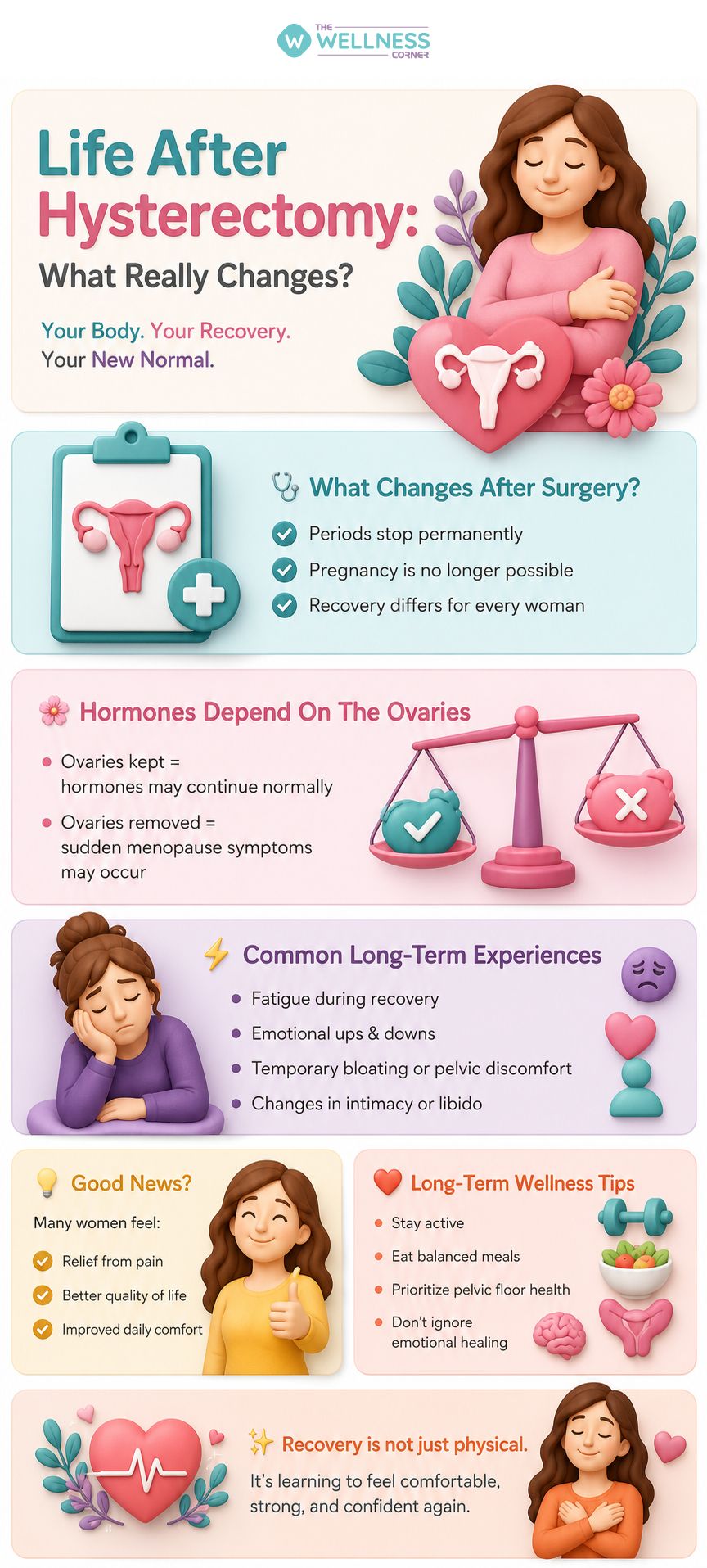
What Happens During A Hysterectomy?
A hysterectomy involves surgical removal of the uterus.
Depending on the medical condition, surgery may involve removing:
- Only the uterus
- The uterus and cervix
- The uterus along with ovaries and fallopian tubes
The long-term experience often differs depending on whether the ovaries remain intact.
This is important because ovaries continue producing hormones even after the uterus is removed.
Menstruation Stops Permanently
One of the most immediate and permanent changes after uterus removal is the end of menstrual periods.
Without a uterus, pregnancy is no longer possible, and menstrual bleeding stops completely.
For many women who struggled with severe bleeding or painful periods, this can bring significant relief and improved quality of life.

Hormonal Changes Depend On The Ovaries
A common misconception is that every hysterectomy automatically causes menopause.
That is not always true.
1. If The Ovaries Are Preserved
Hormone production may continue naturally.
Some women experience little hormonal change initially.
Also Read: 9 Common Symptoms Of Hormonal Imbalances Among Women (And What To Do?)
2. If The Ovaries Are Removed
Menopause may begin suddenly because estrogen and progesterone production drops significantly.
This may lead to symptoms such as:
- Hot flashes
- Mood changes
- Sleep disturbances
- Vaginal dryness
- Night sweats
The transition can feel more intense when menopause occurs surgically rather than gradually.
3. Emotional Recovery Is Often Overlooked
Physical healing is only one part of recovery.
For some women, hysterectomy may trigger emotional responses related to:
- Fertility
- Body image
- Identity
- Aging
- Relationships
Even when surgery improves health significantly, emotional adjustment may still take time.
Others may feel relief after years of pain or difficult symptoms.
Both experiences are valid.
Energy Levels May Take Time To Normalize
Recovery does not end when surgical wounds heal.
The body still needs time to regain strength internally.
Some individuals notice:
- Fatigue
- Lower stamina
- Reduced energy during recovery
This is especially common in the first several weeks or months after surgery.
Gradual movement, proper nutrition, hydration, and adequate rest can support recovery.
Digestive And Bladder Changes May Occur Temporarily
The pelvic region contains multiple interconnected organs and muscles.
After surgery, some women experience temporary changes such as:
- Constipation
- Bloating
- Urinary discomfort
- Pelvic pressure sensations
These symptoms often improve gradually as healing progresses.
Pelvic floor rehabilitation may help in some cases.
Sexual Health After Hysterectomy
One of the most common concerns surrounding hysterectomy involves intimacy and sexual wellness.
Experiences vary greatly from person to person.
Some women report:
- Improved comfort due to reduced pain
- Better quality of life
- Reduced anxiety related to symptoms
Others may experience temporary changes related to:
- Hormonal shifts
- Vaginal dryness
- Emotional adjustment
- Recovery discomfort
Open communication and medical guidance can help address concerns during recovery.

Bone And Heart Health May Become More Important
If ovaries are removed before natural menopause, reduced estrogen levels may affect long-term health.
Estrogen plays a role in supporting:
- Bone density
- Heart health
- Metabolism
This is why ongoing medical follow-up becomes important after surgical menopause.
Lifestyle habits such as nutrition, exercise, and regular health screenings can support long-term wellness.
The Importance Of Pelvic Floor Health
The pelvic floor muscles help support organs within the pelvis.
After hysterectomy, maintaining pelvic floor strength may become especially important for:
- Bladder control
- Core support
- Pelvic stability
Certain exercises and physiotherapy approaches may help strengthen these muscles safely.
Recovery Looks Different For Everyone
No two recovery journeys are identical.
Some people recover relatively quickly, while others need more time physically or emotionally.
Several factors may influence recovery, including:
- Age
- Overall health
- Type of surgery
- Hormonal status
- Stress levels
- Support systems
Comparing recovery experiences with others can sometimes create unnecessary anxiety.
Long-Term Lifestyle Habits Matter
Life after uterus removal is not defined solely by surgery itself.
Long-term wellness still depends heavily on everyday habits such as:
- Balanced nutrition
- Regular movement
- Stress management
- Sleep quality
- Preventive healthcare
Many women continue living active, healthy, fulfilling lives after hysterectomy.
When To Seek Medical Attention?
While many symptoms improve gradually, medical advice should be sought if you experience:
- Persistent severe pain
- Heavy bleeding
- Fever
- Signs of infection
- Difficulty urinating
- Severe emotional distress
Regular follow-up care remains important after surgery.
The Bigger Picture: Recovery Is Both Physical And Emotional
Hysterectomy is not simply a surgical procedure.
For many women, it represents a major life transition.
Some feel relief. Others feel uncertainty. Many experience a mixture of both.
The long-term journey often involves adapting physically, emotionally, and hormonally over time.
The most important thing is recognizing that recovery is not only about healing scars. It is also about rebuilding comfort, confidence, and overall well-being.
Support Women’s Wellness With The Wellness Corner
Women’s health involves far more than managing symptoms alone.
The Wellness Corner offers expert-backed support for hormonal health, emotional wellness, nutrition, fitness, stress management, and preventive care to help individuals build healthier and more balanced lifestyles.
Because long-term wellness begins with informed care and compassionate support.
Frequently Asked Questions (FAQs)
Leave a Comment

Sign-Up Now & Unlock
₹100 Cashback
Recently Published
Related Articles


Health Checks @ Home
Service
Explore



Follow us on:


© 2026 Truworth Health Technologies Pvt. Ltd.