Starting Progesterone Pills? Here's What You Need To Know About Possible Side Effects
10 days ago
6 minute read.

If you've recently been prescribed progesterone pills, you may have questions about why you need them and what side effects you might experience. Whether they're recommended to support pregnancy, regulate menstrual cycles, manage menopause symptoms, or treat certain hormonal conditions, progesterone medications are commonly used in women's healthcare.
Like all medications, progesterone pills offer important benefits but can also cause side effects. Fortunately, many of these effects are mild and temporary, while others may require medical attention. Knowing what to expect can help you use your medication safely and feel more confident throughout your treatment.
In this article, we'll explore the common and less common side effects of progesterone pills, who may be more likely to experience them, and when it's important to speak with your healthcare provider.
Also Read: Ten Ways Stress Affects Women's Health
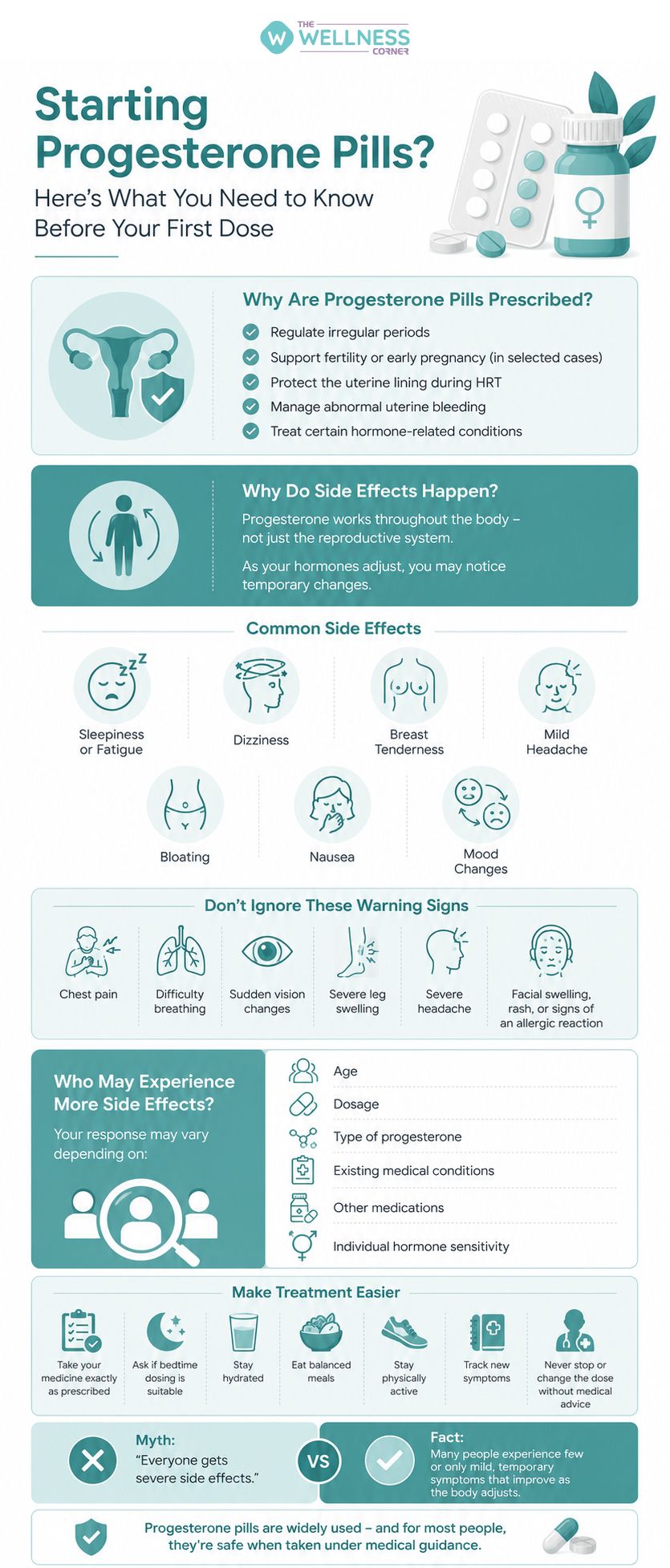
What Are Progesterone Pills?
Progesterone is a hormone naturally produced by the body that plays a vital role in regulating the menstrual cycle, supporting fertility, and maintaining pregnancy. It helps prepare the uterus for pregnancy, supports the early stages of pregnancy, and works alongside estrogen to maintain hormonal balance.
Progesterone pills contain either natural (micronized) progesterone or synthetic forms known as progestins. Depending on your condition, your healthcare provider may prescribe them to:
- Regulate irregular menstrual cycles
- Support fertility treatments
- Help maintain early pregnancy in selected cases
- Manage abnormal uterine bleeding
- Help safeguard the lining of the uterus during hormone replacement therapy (HRT).
- Treat certain hormonal disorders
The specific medication, dosage, and duration of treatment vary depending on your medical needs.
Why Do Progesterone Pills Cause Side Effects?
Progesterone affects multiple organs and body systems, including the brain, uterus, breasts, and digestive tract. As your body adjusts to changes in hormone levels, you may notice temporary physical or emotional symptoms.
Many people experience few or no side effects, while others may notice mild changes during the first few weeks of treatment. In most cases, these symptoms improve as the body adapts.

Common Side Effects Of Progesterone Pills
Most side effects are mild and often settle over time. Among the side effects reported most often are:
1. Drowsiness Or Fatigue
Progesterone can have a calming effect on the nervous system, making some people feel sleepy or tired, especially after taking their dose.
If your healthcare provider recommends it, taking the medication at bedtime may help reduce daytime drowsiness.
2. Dizziness
Some individuals may experience mild dizziness, particularly when standing up quickly. Rising slowly from a seated or lying position may help reduce this sensation.
3. Breast Tenderness
Hormonal changes can make the breasts feel sore, swollen, or more sensitive than usual. This symptom often improves as hormone levels stabilize.
Also Read: 5 Ways To Take Care Of Your Breast Health
4. Headache
Some people develop mild headaches after starting progesterone therapy. Staying hydrated and following your healthcare provider's advice can help manage discomfort.
5. Bloating
Fluid retention and hormonal fluctuations may cause temporary bloating or a feeling of abdominal fullness.
6. Nausea
A small number of people experience mild nausea, particularly when first starting treatment. Taking the medication with food, if appropriate, may help reduce stomach discomfort.

Changes In Menstrual Bleeding
One of the most noticeable effects of progesterone therapy is a change in menstrual bleeding patterns.
You may experience:
- Spotting between periods
- Lighter or heavier menstrual flow
- Changes in cycle length
- Withdrawal bleeding after completing a treatment course
These changes are often expected, but unusually heavy bleeding or prolonged bleeding should always be discussed with your healthcare provider.
Emotional And Mood Changes
Hormones can influence emotional well-being, and progesterone is no exception.
Some individuals may notice:
- Mood swings
- Irritability
- Increased emotional sensitivity
- Mild anxiety
- Temporary low mood
These symptoms are not experienced by everyone, and their intensity varies from person to person.
If mood changes become severe or interfere with daily life, seek medical advice promptly.
Also Read: 7 Nutritional Deficiencies Linked To Mood Swings And Irritability
Less Common But Important Side Effects
Although uncommon, some people may develop side effects that require medical attention.
These may include:
- Severe headaches
- Vision changes
- Significant swelling of the legs
- Chest pain
- Shortness of breath
- Severe allergic reactions such as facial swelling, rash, or difficulty breathing
If you develop any of these symptoms, seek medical attention without delay.
Who May Be More Likely To Experience Side Effects?
Certain factors can influence how your body responds to progesterone medication.
These include:
- Your age
- The dose prescribed
- The type of progesterone used
- Existing medical conditions
- Other medications you take
- Individual sensitivity to hormonal changes
Your healthcare provider considers these factors before recommending treatment.
Tips For Managing Mild Side Effects
If your symptoms are mild, a few simple strategies may help improve your comfort.
Consider the following:
- Take your medication exactly as prescribed.
- Ask your healthcare provider whether taking it at bedtime is appropriate.
- Stay well hydrated throughout the day.
- Eat balanced meals to help reduce nausea.
- Get adequate sleep and regular physical activity.
- Keep track of any new symptoms in a health journal.
- Never change the dose or stop the medication without medical advice.
Small adjustments to your daily routine can often make treatment easier to tolerate.
Also Read: How To Build A Balanced Plate?(No Dieting Needed)
When Should You Contact Your Healthcare Provider?
While mild side effects are fairly common, certain situations require professional evaluation.
Speak with your healthcare provider if you experience:
- Persistent or worsening headaches
- Heavy or prolonged vaginal bleeding
- Severe dizziness
- Significant mood changes
- Persistent nausea or vomiting
- New breast lumps
- Symptoms that interfere with your daily activities
Early medical advice can help determine whether your treatment needs adjustment.

Can Progesterone Pills Be Taken Safely?
For many individuals, progesterone pills are both safe and effective when used under medical supervision.
The key is using them only for the prescribed reason, at the correct dose, and for the recommended duration. Self-medicating with hormone therapy or using someone else's prescription can increase the risk of complications and should always be avoided.
Regular follow-up appointments allow your healthcare provider to monitor your response to treatment and make any necessary adjustments.
The Bottom Line
Progesterone pills are widely prescribed to support reproductive health, regulate menstrual cycles, and manage various hormone-related conditions. While side effects are possible, many are mild and improve as your body adjusts to the medication.
Understanding what is considered normal and recognizing symptoms that require medical attention can help you feel more prepared throughout your treatment. Always take progesterone exactly as directed, and don't hesitate to discuss any concerns or unexpected symptoms with your healthcare provider.
When used appropriately under professional guidance, progesterone therapy can be an effective part of managing many women's health conditions while maintaining a favorable safety profile.
Get Trusted Women's Health Support With The Wellness Corner
Hormonal treatments can raise many questions, and having reliable guidance makes all the difference. Whether you've been prescribed progesterone pills, are experiencing side effects, or want to better understand your treatment, The Wellness Corner gives you access to qualified healthcare professionals who can provide personalized advice and evidence-based support. Take charge of your hormonal health with expert care tailored to your individual needs.
Leave a Comment

Sign-Up Now & Unlock
₹100 Cashback
Recently Published
Related Articles


Health Checks @ Home
Service
Explore



Follow us on:


© 2026 Truworth Health Technologies Pvt. Ltd.