5 Unexpected Substances That Can Affect Your Liver More Than Alcohol
10 days ago
6 minute read.
When people think about liver damage, alcohol is often the first thing that comes to mind. And for good reason. Excessive alcohol consumption can contribute to fatty liver, alcoholic hepatitis, fibrosis, cirrhosis, and liver cancer.
But alcohol is not the only substance that can put your liver under serious stress.
Some medicines, supplements, bodybuilding products, and concentrated herbal preparations can also cause drug-induced liver injury (DILI). In some situations, these substances can trigger severe liver inflammation or even acute liver failure. The American Association for the Study of Liver Diseases recognizes prescription medicines, over-the-counter drugs, herbal products, and dietary supplements as important causes of liver injury.
One important clarification: it would be inaccurate to say that these substances are universally "more harmful" than alcohol. Their effects depend on the dose, duration of use, individual health, and the specific substance involved. However, some can cause significant liver injury even when people assume they are harmless.
Here are five substances worth knowing about.
Also Read: 8 Hidden Toxins Damaging Your Gut, Liver & Hormones
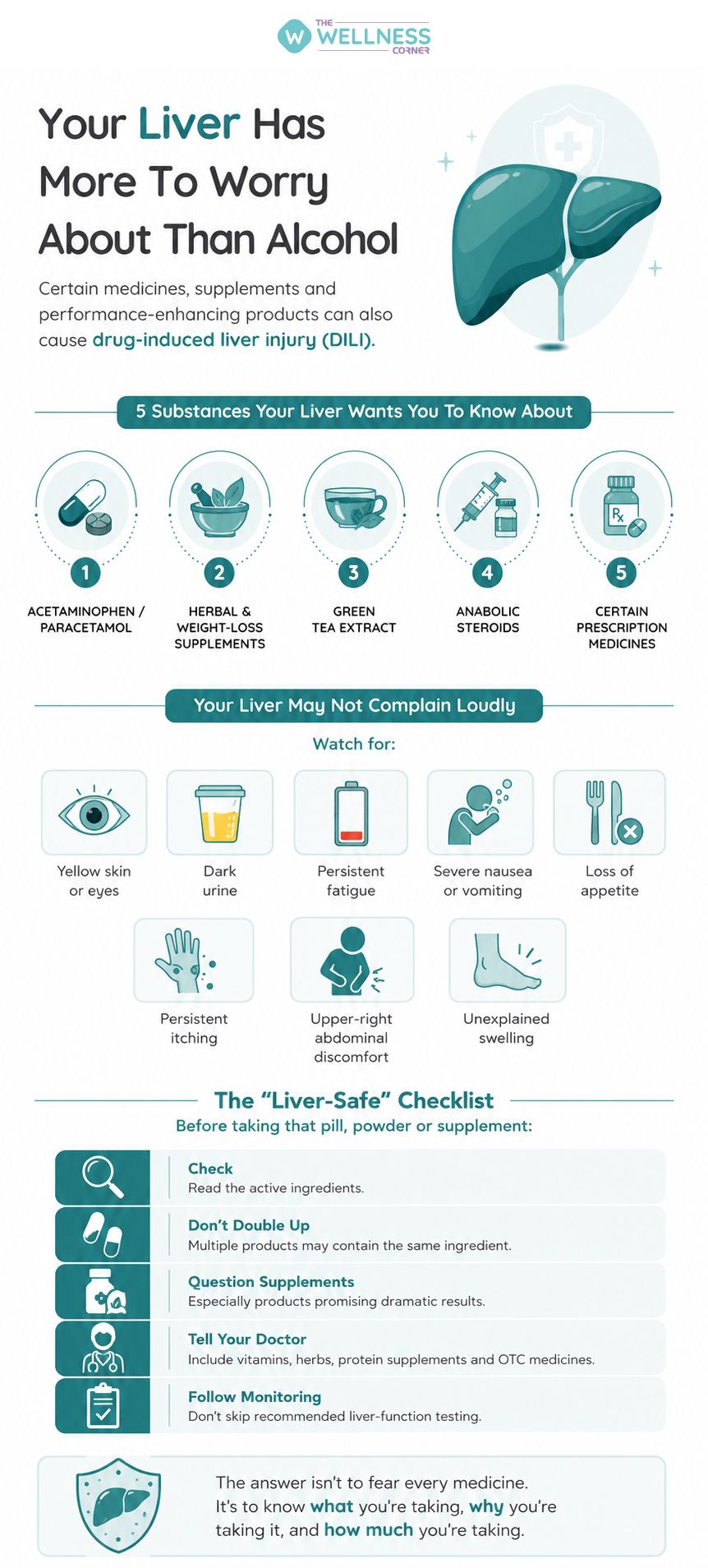
1. Acetaminophen: A Common Painkiller That Can Become Dangerous
Acetaminophen, also known as paracetamol in many countries, is widely used for headaches, fever, body aches, and pain. It is considered safe when taken according to recommended doses.
The problem begins when people accidentally take too much.
Excessive acetaminophen is one of the most important causes of acute liver injury. The risk can increase when someone takes multiple products containing acetaminophen without realizing they contain the same ingredient. Some combination medicines for colds, flu, and pain may contain it as well. The liver processes acetaminophen, and excessive amounts can overwhelm normal detoxification pathways and lead to liver cell damage.
How to use it safely?
Always check the active ingredients on combination medicines and follow the recommended dosage. Avoid taking more than directed simply because symptoms have not improved.
2. Herbal And Weight-Loss Supplements: "Natural" Does Not Always Mean Safe
The label "natural" does not always guarantee that a product is harmless.
Herbal supplements and dietary products can contain concentrated plant extracts that affect the liver. According to hepatology research, herbal and dietary supplement-induced liver injury has become an important clinical problem, with commonly implicated products including green tea extract, bodybuilding supplements, and multi-ingredient nutritional products.
Weight-loss supplements deserve particular caution because some contain several concentrated ingredients in a single formulation. Identifying the substance responsible for liver injury can become difficult when a product contains multiple compounds.
A smarter approach
Do not start a supplement simply because it is marketed as herbal, detoxifying, or natural. Discuss regular supplement use with a healthcare professional, particularly if you already have liver disease or take other medicines.
3. Green Tea Extract: Healthy Drink, Different Story In Concentrated Form
Green tea itself is generally associated with a number of potential health benefits. However, concentrated green tea extract found in some dietary and weight-loss supplements is a different matter.
Research reviewed by the American Association for the Study of Liver Diseases has identified green tea extract as a recognized cause of supplement-associated liver injury. Reported cases can involve acute hepatocellular injury and, in rare situations, severe outcomes.
This distinction matters.
Drinking a cup of green tea is not equivalent to taking a highly concentrated extract in supplement form. The amount and concentration of active compounds can be dramatically different.
Before taking a green tea supplement
Look at the ingredient list, dosage, and reason you are taking it. A supplement promoted for rapid weight loss or "detox" should not automatically be considered safe because it contains green tea.
Also Read: Best Green Teas For Weight Loss And Reduced Belly
4. Anabolic Steroids: The Hidden Liver Risk In Some Bodybuilding Products
Trying to build muscle quickly can sometimes lead people toward anabolic androgenic steroids or bodybuilding products containing steroid-like compounds.
These substances can cause liver problems, particularly cholestatic liver injury. People may develop significant jaundice, itching, and other signs of impaired bile flow. AASLD guidance specifically identifies anabolic steroids among substances associated with drug-induced liver injury.
The risk is particularly concerning when products are purchased without proper medical supervision or when users combine several performance-enhancing substances.
Bigger muscles should not come at the expense of liver health
If you are considering supplements for muscle growth, recovery, or athletic performance, it is worth checking the ingredients carefully and discussing them with a qualified professional.

5. Certain Prescription Medicines: Necessary Treatment With A Need For Monitoring
This category may come as a surprise.
Prescription medicines are often essential for treating serious health conditions, but some can cause liver injury in susceptible individuals. However, this is not a reason to discontinue medication that has been prescribed to you. It means that certain medicines require appropriate monitoring.
Methotrexate, for example, can be associated with liver problems including fatty liver and fibrosis during long-term treatment. Risk may be higher in people with certain existing conditions, including obesity, diabetes, hyperlipidemia, or pre-existing liver disease. Regular liver-related monitoring is therefore part of safe treatment for appropriate patients.
Other prescription medicines have also been associated with drug-induced liver injury, including some antibiotics, anti-tuberculosis medicines, anti-inflammatory drugs, and other drug classes.
Never stop medication on your own
If you are concerned about the effect of a medicine on your liver, speak with your doctor. Stopping a prescribed medicine suddenly can itself create serious health risks.
Also Read: Signs Of Liver Toxicity You Should Be Aware Of
Why Is The Liver So Vulnerable?
Your liver processes many of the substances that enter your body, including medicines and certain compounds from supplements.
That makes it essential for metabolism and detoxification, but it also means the liver can sometimes be exposed to substances that cause cellular stress or inflammation.
Drug-induced liver injury can appear in different ways. Some people may develop elevated liver enzymes without obvious symptoms, while others can experience jaundice, itching, nausea, abdominal discomfort, fatigue, or more serious complications. Diagnosis usually involves reviewing medication and supplement exposure, blood tests, and ruling out other causes of liver disease.
Signs Your Liver May Need Attention
Liver problems do not always produce obvious symptoms in the early stages. However, seek medical advice if you experience symptoms such as:
- Yellowing of the skin or eyes
- Dark urine
- Unusual or persistent fatigue
- Severe nausea or vomiting
- Loss of appetite
- Persistent itching
- Discomfort or pain in the upper-right area of the abdomen
- Unexplained swelling
If symptoms appear suddenly or become intense, seek medical attention as soon as possible.
Also Read: Yoga For Liver Health

How Can You Protect Your Liver?
You do not have to avoid every medicine or supplement. What matters most is using them safely and with proper guidance.
Check labels carefully. Read medicine labels to prevent taking multiple products containing the same ingredient.
Do not self-medicate regularly. Frequent use of painkillers or other medicines deserves professional guidance.
Be cautious with supplements. Especially avoid products making dramatic claims about rapid weight loss, muscle growth, or "liver detox."
Tell your doctor what you take. Include vitamins, herbal products, protein supplements, and over-the-counter medicines.
Follow monitoring advice. If a prescription medicine requires liver function testing, do not skip it.
The Bottom Line: Your Liver Needs More Than An Alcohol-Free Day
Avoiding alcohol is certainly helpful for liver health, but it is only one part of the bigger picture.
Some widely available medicines and supplements can also cause serious liver injury, especially when taken in excessive quantities, combined with other products, or used without proper guidance. Acetaminophen, anabolic steroids, concentrated herbal extracts, green tea extract, and certain prescription medicines are examples that deserve attention.
The safest approach is not fear. It is awareness.
Know what you are taking, understand why you are taking it, follow recommended doses, and talk to a healthcare professional when something is unclear.
Take Better Care of Your Health With The Wellness Corner
Your everyday choices, including medicines, supplements, food habits, and lifestyle routines, can influence your long-term wellbeing. For practical health information and professional guidance, explore The Wellness Corner and make informed choices about your health.

FAQs
Leave a Comment

Sign-Up Now & Unlock
₹100 Cashback
Recently Published
Related Articles


Health Checks @ Home
Service
Explore



Follow us on:


© 2026 Truworth Health Technologies Pvt. Ltd.