How To Transform From Lifespan To "Healthspan"?
8 days ago
7 minute read.
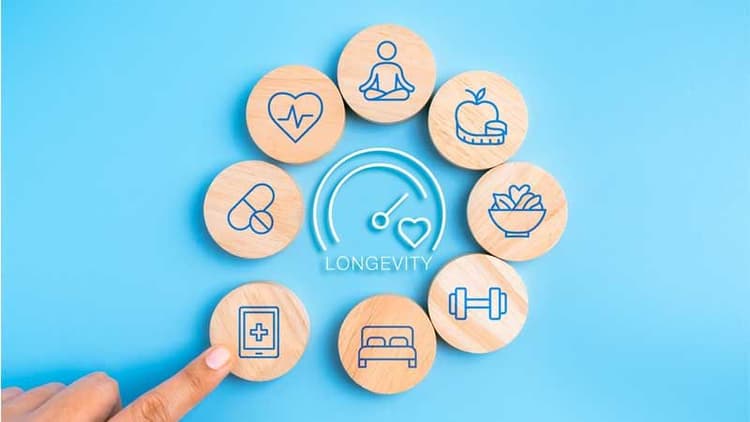
Living longer is something most people want. But what if the real goal should not simply be adding more years to your life, but adding more healthy, active, independent years to those years?
That is where the idea of healthspan comes in.
Your lifespan refers to how long you live. Your healthspan refers to how long you live in relatively good health, with the ability to stay active, think clearly, maintain independence, and enjoy the things that matter to you.
The two do not always move together.
Someone may live into their 80s or 90s while spending a significant portion of later life managing chronic conditions, mobility problems, or limitations in daily activities. The good news is that many everyday behaviours can influence how well you age.
You cannot control every factor that determines your health. Genetics, environment, access to healthcare, and life circumstances all matter. But there are practical steps you can take today to support a healthier future.
The goal is not to chase eternal youth. It is to make more of your years functional, energetic, and meaningful.
Also Read: Why Office Workers Are Experiencing Fatigue Despite “Healthy” Lifestyles?
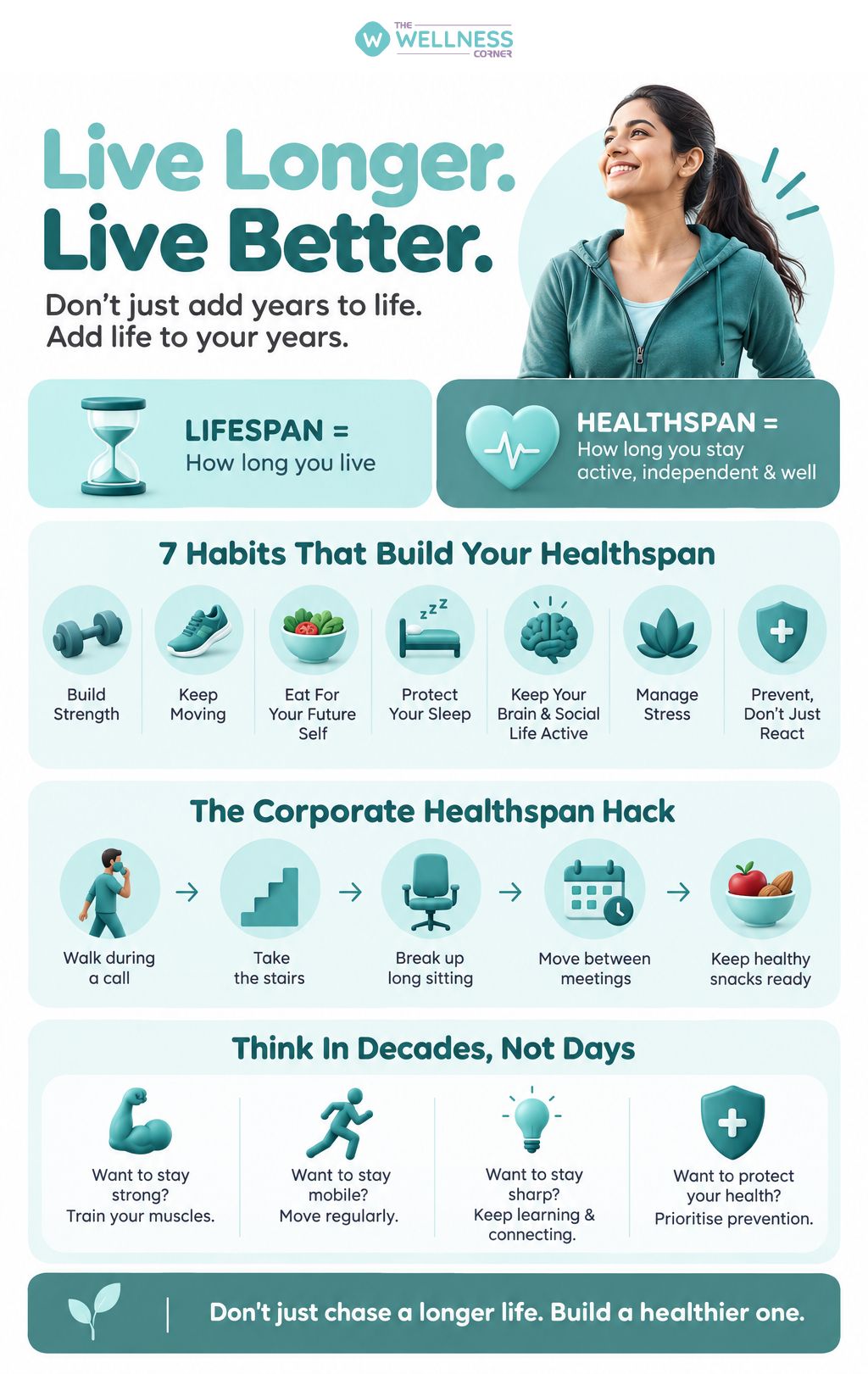
Lifespan Is About Years. Healthspan Is About What You Can Do With Them
Imagine two people who are both 75.
One can comfortably climb stairs, prepare meals, travel, meet friends, exercise, and manage everyday tasks independently.
The other spends much of the day sitting, struggles with basic movement, and depends heavily on others for routine activities.
They may have a similar lifespan ahead of them, but their healthspans are very different.
Healthspan focuses on quality of life rather than simply the number on your birthday cake.
That means maintaining strength, mobility, cognitive function, emotional wellbeing, social connection, and the ability to participate in everyday life.
Start With Your Muscles, Not Just Your Weight
As we age, maintaining muscle strength becomes increasingly important.
Muscle supports movement, balance, posture, and everyday independence. Losing too much muscle and physical capacity can make ordinary activities such as climbing stairs, carrying groceries, or getting up from a chair more difficult.
This is why strength training deserves a place in a long-term healthspan strategy.
You do not need to become a bodybuilder.
Resistance exercises using weights, resistance bands, machines, or even your body weight can help build and maintain strength when performed appropriately.
The key is consistency.
Also Read - Building Muscle After 35: Can Our Muscles Stay Young Even As We Get Old?

Cardio Keeps Your Body Ready For Life
Strength is only one part of physical fitness.
Cardiovascular activity supports heart and lung function and can make everyday activities feel easier.
Walking, cycling, swimming, dancing, jogging, and other aerobic activities can all contribute to an active lifestyle.
If you spend most of your working day sitting, even adding short movement breaks can help you become less sedentary.
You do not need to wait for the perfect one-hour workout window.
A 20-minute walk is still movement. Taking the stairs still counts. A short activity break between meetings is better than remaining seated for another hour.
Think of movement as something you accumulate throughout the day.
Also Read: A 10-Minute Seated Cardio Workout For Every Body, Guaranteed To Make You Sweat
Your Diet Should Support The Future You
A healthspan-focused diet does not need to involve extreme restrictions.
Instead, build your meals around nutrient-rich foods such as vegetables, fruits, whole grains, legumes, nuts, seeds, and suitable protein sources.
Healthy fats from foods such as nuts, seeds, fish, and plant oils can also fit into a balanced eating pattern.
At the same time, keep highly processed foods, excessive added sugars, and excessive sodium from dominating your everyday diet.
The objective is not to eat perfectly.
It is to create a pattern that provides the nutrients your body needs consistently over many years.

Sleep Is Part Of Your Long-Term Health Strategy
Sleep can be easy to sacrifice when work becomes demanding.
Late-night emails, early meetings, deadlines, family responsibilities, and screen time can gradually push sleep lower on the priority list.
But consistently inadequate sleep can affect mood, concentration, energy, and overall health.
Treat sleep as part of your health routine rather than as leftover time after everything else is finished.
A consistent sleep schedule, a relaxing bedtime routine, and a comfortable sleep environment can make a meaningful difference.
If you regularly struggle to sleep or feel excessively tired during the day, consider discussing the problem with a healthcare professional.
Also Read: Is The 8-Hour Sleep Rule A Myth? What Science Really Says?
Keep Your Brain In The Conversation
Healthspan is not just about physical fitness.
Your brain needs attention too.
Learning new skills, reading, solving problems, engaging in hobbies, having meaningful conversations, and staying curious can keep your mind actively engaged.
Social connection also matters.
Regular interaction with friends, family, colleagues, community groups, or other supportive networks can contribute to emotional wellbeing.
A healthy future is not simply one where you can walk farther. It is one where you continue to have reasons to get up and participate.

Stress Management Is Preventive Health
Nobody can eliminate stress completely.
Work pressures, financial responsibilities, relationships, uncertainty, and unexpected events are part of life.
The goal is to develop healthier ways of responding to stress.
Regular exercise, adequate sleep, relaxation techniques, mindfulness, hobbies, time outdoors, and meaningful social connection can all support emotional wellbeing.
If stress, anxiety, low mood, or emotional difficulties are interfering with daily life, professional support can be valuable.
Taking care of your mental wellbeing is not separate from healthspan. It is part of it.
Also Read: Psychology-Backed Ways To Deal With People Who Stress You Out
Prevention Can Give You More Healthy Years
Waiting until you feel unwell to think about your health can mean missing opportunities for prevention.
Routine health check-ups and appropriate screening can help identify certain health risks early.
Depending on your age, sex, family history, and individual risk factors, your healthcare professional may recommend monitoring things such as blood pressure, blood glucose, cholesterol, or other health indicators.
Do not rely solely on how you feel.
Some health conditions can develop quietly for years before noticeable symptoms appear.

Protect Your Health From The Basics
Some of the most powerful healthspan habits are not particularly glamorous.
Avoiding tobacco, limiting excessive alcohol, using protective equipment when appropriate, maintaining healthy dental habits, and taking medications as prescribed can all contribute to long-term health.
The boring habits often win because they are sustainable.
You do not need a complicated longevity routine involving dozens of supplements or expensive treatments.
You need habits you can realistically maintain.
Make Your Environment Work For You
Your surroundings influence your behaviour more than you might realize.
If your workday involves sitting continuously, keep opportunities for movement visible. If healthy snacks are difficult to access, prepare them in advance. If you want to walk more, make walking part of your routine.
For corporate professionals, this can mean taking walking meetings when practical, using stairs, standing periodically, or scheduling short movement breaks between tasks.
Design your environment so healthier choices become easier choices.

Think In Decades, Not Days
Perhaps the biggest mindset shift is to stop looking for overnight transformations.
Healthspan is built gradually.
One healthy meal will not transform your future. One missed workout will not ruin it either.
What matters is what you repeatedly do over months and years.
Ask yourself a simple question:
What do I want my body and mind to be capable of doing 10, 20, or 30 years from now?
Then work backwards.
If you want to remain strong, train your muscles. If you want to stay mobile, move regularly. If you want to protect your heart, build heart-friendly habits. If you want to stay mentally engaged, keep learning and connecting with people.
The Bottom Line
Living longer is only one part of the equation.
The bigger goal is to preserve the ability to move, think, connect, work, explore, and enjoy life for as many years as possible.
You cannot control everything about ageing, but you can influence many of the habits that shape your long-term health.
So instead of asking only, "How long do I want to live?" consider another question:
"How do I want to live while I am here?"
That is where healthspan begins.
Ready to invest in the healthier years ahead? Explore The Wellness Corner for practical health information, expert guidance, wellness tools, and resources designed to help you build sustainable habits for a healthier life.

Leave a Comment
Sign-Up Now & Unlock
₹100 Cashback
Recently Published
Related Articles


Health Checks @ Home
Service
Explore



Follow us on:


© 2026 Truworth Health Technologies Pvt. Ltd.