These Commonly Prescribed Pregnancy Medications Have Been Linked To A Higher Autism Risk: What The Research Really Says?
8 days ago
6 minute read.

Pregnancy often comes with many questions about medications, nutrition, and lifestyle choices. While some medicines are considered safe during pregnancy, others require careful evaluation because they may affect both the mother and the developing baby.
Recently, headlines have claimed that certain widely prescribed medications during pregnancy are linked to a 50% higher risk of autism in children. Such reports can understandably cause concern among expectant parents. However, it's essential to look beyond the headlines and understand what the research actually found.
Studies investigating medication use during pregnancy typically identify associations rather than direct cause-and-effect relationships. A reported increase in risk does not necessarily mean that a medication causes autism, as many other factors can influence the findings.
In this article, we'll explore which medications have been studied, what the evidence suggests, who should be concerned, and why you should never stop prescribed medication without first speaking to your healthcare provider.
Also Read: Know The Signs Of Autism Spectrum Disorder
Which Medications Are Being Discussed?
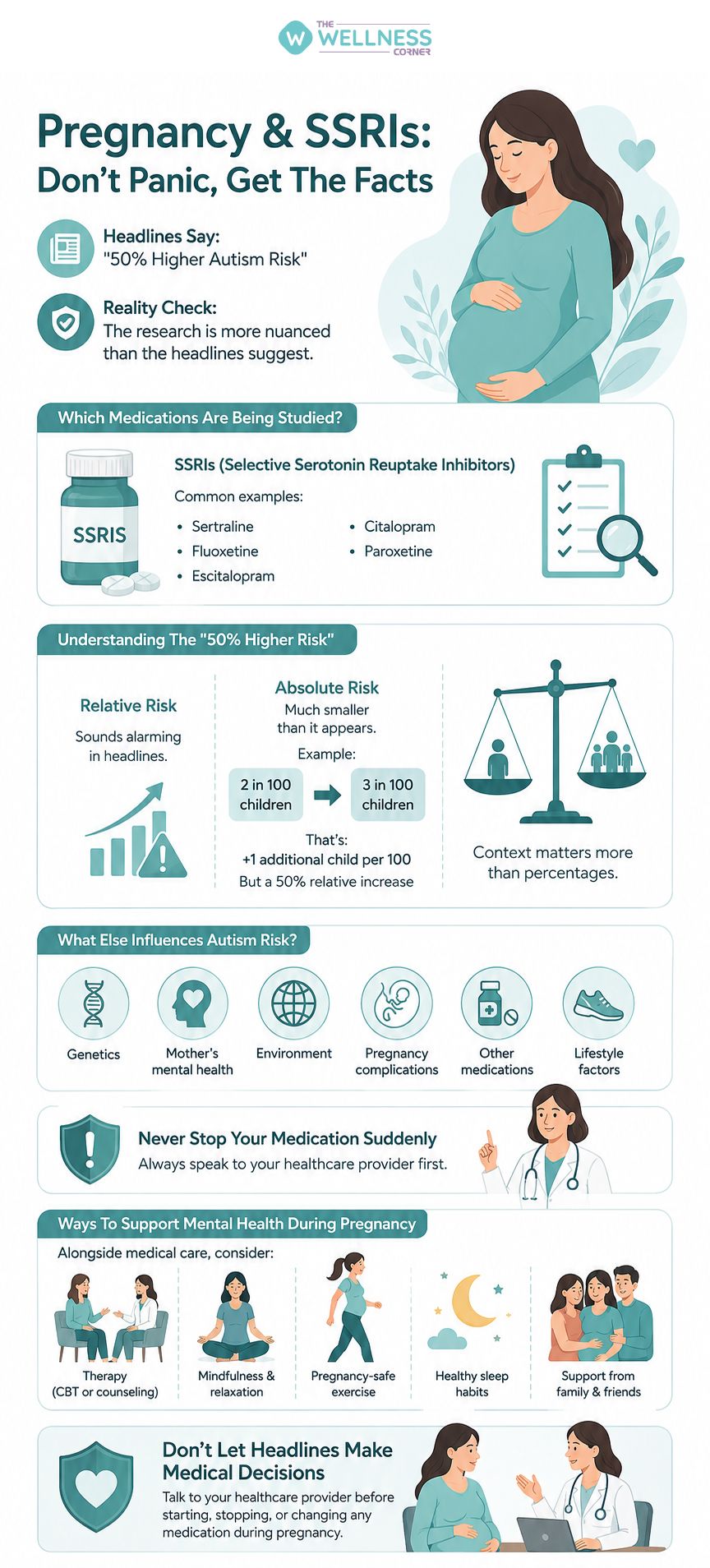
The medications attracting attention are selective serotonin reuptake inhibitors (SSRIs), a commonly prescribed group of antidepressants.
SSRIs are often recommended to treat:
- Depression
- Anxiety disorders
- Panic disorder
- Obsessive-compulsive disorder (OCD)
- Post-traumatic stress disorder (PTSD)
Common examples include:
- Sertraline
- Fluoxetine
- Escitalopram
- Citalopram
- Paroxetine
These medications help regulate serotonin levels in the brain and can significantly improve mental health for many individuals.
Understanding The Research Behind The Headlines
Several observational studies have explored whether prenatal exposure to SSRIs is associated with autism spectrum disorder (ASD) in children.
Some studies have reported that children exposed to SSRIs during pregnancy appeared to have approximately a 50% higher relative risk of receiving an autism diagnosis compared with children who were not exposed.
However, this finding requires careful interpretation.
A higher relative risk does not mean that half of exposed children will develop autism. The absolute risk remains relatively low, and many researchers believe that factors such as parental genetics, maternal mental health, environmental influences, and pregnancy-related conditions may contribute to the observed association.
In other words, current research does not prove that SSRIs directly cause autism.

Why Mental Health Treatment During Pregnancy Matters?
Depression and anxiety during pregnancy should never be ignored.
Untreated mental health conditions can affect both maternal and fetal health and may increase the likelihood of:
- Poor prenatal care
- Inadequate nutrition
- Sleep disturbances
- Increased stress hormone levels
- Premature birth
- Low birth weight
- Difficulty bonding after delivery
For some women, continuing antidepressant treatment during pregnancy may provide greater overall benefits than stopping medication.
Treatment decisions should always balance potential risks against the consequences of untreated illness.
Also Read: Is There Any Nutritional Significance Of Feeding Newborns With Silverware?
Why Studies Can Show Different Results?
Research involving pregnancy is complex.
Unlike clinical drug trials, researchers generally cannot randomly assign pregnant women to take or avoid medications for ethical reasons.
Instead, most evidence comes from observational studies, which compare large groups of people over time.
The findings from these studies can be affected by a variety of factors, including:
- Family history of autism
- Severity of maternal depression
- Smoking or alcohol use
- Other medications
- Pregnancy complications
- Genetic influences
- Socioeconomic differences
Because of these variables, researchers often cannot determine whether the medication itself or other underlying factors explain the observed association.

Understanding Relative Risk Vs Absolute Risk
One reason headlines can sound alarming is the difference between relative and absolute risk.
Imagine that the chance of a condition occurring increases from 2 in 100 children to 3 in 100 children.
This represents:
- An absolute increase of 1 additional case per 100 children
- A relative increase of 50%
Both statements describe the same data, but they create very different impressions.
This is why healthcare professionals encourage patients to consider the complete picture rather than focusing only on percentages.
Should Pregnant Women Stop Taking SSRIs?
No. You should never stop taking prescribed antidepressants without medical guidance.
Stopping SSRIs suddenly may lead to:
- Withdrawal symptoms
- Return of depression or anxiety
- Increased emotional distress
- Reduced ability to care for yourself during pregnancy
If you're pregnant or planning to become pregnant and take antidepressants, discuss your treatment with your healthcare provider.
Together, you can review:
- Your mental health history
- Current symptoms
- Medication benefits
- Potential risks
- Alternative treatment options if appropriate
Every pregnancy is different, and treatment should always be individualized.
Other Ways To Support Mental Health During Pregnancy
Medication is only one part of mental health care.
Depending on your situation, your healthcare provider may also recommend:
- Cognitive behavioral therapy (CBT)
- Counseling or psychotherapy
- Stress-management techniques
- Mindfulness practices
- Regular physical activity approved during pregnancy
- Healthy sleep habits
- Social support from family and friends
For many women, combining medication with psychological support provides the best outcomes.
What Expecting Parents Should Remember?
News headlines often simplify complex scientific findings.
While research into autism continues to evolve, experts agree on several important points:
- Autism has multiple contributing factors, including genetics and environmental influences.
- No single medication has been proven to directly cause autism.
- Decisions about medication use during pregnancy should always be made with a qualified healthcare professional.
- Untreated maternal depression can also pose significant health risks.
Rather than making changes based on headlines alone, discuss any concerns with your doctor so you can make informed decisions based on your individual circumstances.
Also Read: Diet Changes To Manage Anxiety And Depression

The Bottom Line
Research exploring the relationship between antidepressant use during pregnancy and autism has raised important questions, but it has not established a direct cause-and-effect relationship. Reports of a "50% higher risk" refer to a relative increase observed in some studies and should be interpreted alongside the overall, or absolute, risk and the limitations of the available evidence.
If you're pregnant, planning a pregnancy, or currently taking an SSRI, don't stop or change your medication on your own. The safest approach is to have an open discussion with your healthcare provider, who can weigh the potential benefits and risks based on your medical history. Well-informed decisions, supported by professional guidance, are the best way to protect both maternal and fetal health.
Frequently Asked Questions (FAQs)
Leave a Comment

Sign-Up Now & Unlock
₹100 Cashback
Recently Published
Related Articles


Health Checks @ Home
Service
Explore



Follow us on:


© 2026 Truworth Health Technologies Pvt. Ltd.