Morning Affirmations For Better Success Rate
3 months ago
6 minute read.

For many people, the day starts with a sense of urgency and a long list of things to do.
The alarm goes off.
Many people reach for their phones and start checking emails before they even leave their beds.
Notifications start appearing.
The mind immediately shifts toward responsibilities, deadlines, and unfinished tasks.
Before the day has even started properly, stress often takes over.
But what if the first few minutes of the morning could help set a different tone?
This is where morning affirmations come in.
While affirmations are not magic formulas that guarantee success, they can be powerful tools for shaping mindset, building confidence, and creating a more positive outlook throughout the day.
Many successful individuals intentionally start their mornings with thoughts and habits that support focus, resilience, and self-belief.
Morning affirmations are one simple way to do exactly that.
Also Read: 9 Morning Food Habits We Can Adapt From Indian Villages For Better Health
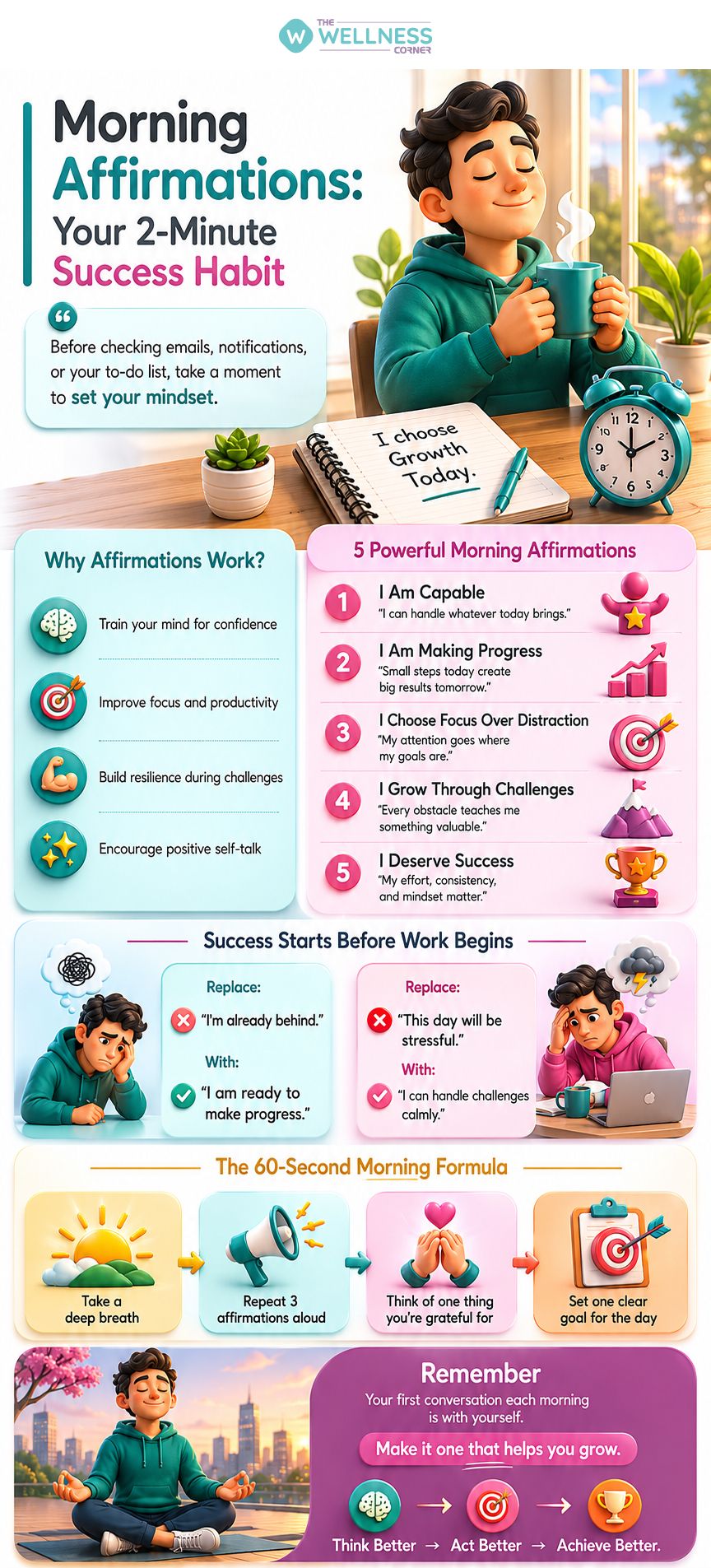
What Are Morning Affirmations?
Morning affirmations are positive statements that people repeat to themselves at the beginning of the day.
These statements are designed to encourage:
- Confidence
- Motivation
- Self-awareness
- Optimism
- Focus
- Emotional resilience
Examples may include:
- "I am capable of handling today's challenges."
- "I am making progress every day."
- "I am capable of developing new skills and growing through experience."
- "I deserve success that comes from consistent effort."
The goal is not to ignore reality or pretend challenges do not exist.
Instead, affirmations help direct attention toward constructive thinking patterns.
Why Your Morning Mindset Matters
The way people think during the first part of the day often influences how they respond to situations later on.
Mornings can set the emotional tone for:
- Productivity
- Decision-making
- Stress management
- Confidence
- Communication
When people begin the day with self-criticism, worry, or negativity, those emotions may continue throughout the day.
Starting with positive and realistic thoughts may help create a stronger mental foundation.
Also Read: Why Am I So Indecisive? 10 Methods That Can Help You Make Decisions

The Connection Between Mindset And Success
Success is influenced by many factors, including skills, opportunities, effort, education, and persistence.
However, mindset also plays an important role.
People who believe they can learn, improve, and overcome setbacks are often more willing to:
- Take action
- Try new things
- Adapt to challenges
- Recover from failures
- Remain consistent
Morning affirmations may support this growth-oriented mindset by reinforcing positive beliefs over time.
How Affirmations Influence Daily Thinking?
The human brain pays attention to thoughts that are repeated frequently.
When individuals consistently focus on negative self-talk, those thoughts may gradually become automatic.
Common examples include:
- "I am not good enough."
- "I always fail."
- "I cannot handle this."
- "I will never succeed."
Repeated affirmations can help challenge these patterns by introducing more balanced and constructive perspectives.
Over time, people may become more aware of their internal dialogue and learn to respond to challenges differently.
Why Confidence Often Starts Internally?
Many individuals believe that confidence is built solely through accomplishments and success.
In reality, confidence is often influenced by the way individuals speak to themselves.
Someone may have impressive accomplishments yet still struggle with self-doubt.
Affirmations can encourage healthier internal conversations by reinforcing strengths, progress, and potential.
While affirmations cannot instantly create confidence, they may support confidence-building efforts when combined with action and experience.

Morning Affirmations That Support Success
Different affirmations resonate with different people.
The most effective affirmations often feel realistic and meaningful.
Here are some examples:
For Confidence
- "I trust my ability to handle challenges."
- "I am stronger than my doubts."
- "I believe in my potential."
For Productivity
- "I will focus my time and effort on the tasks that matter most today."
- "I can take meaningful steps toward my goals."
- "I am capable of making progress."
Also Read: Does Listening To Music Boost Productivity?
For Resilience
- "Setbacks help me learn and grow."
- "I can adapt to unexpected situations."
- "I have successfully handled difficulties in the past, and I am capable of overcoming future challenges as well."
For Personal Growth
- "Every day is an opportunity to improve."
- "I am committed to learning."
- "I am growing, learning, and moving forward a little more each day."
The Science Behind Positive Self-Talk
Psychologists have long studied the impact of self-talk on human behavior.
While affirmations alone do not guarantee success, research suggests that positive self-reflection may influence:
- Stress responses
- Motivation
- Emotional regulation
- Goal-directed behavior
- Self-confidence
The brain often responds differently when attention shifts away from fear and toward possibility.
This helps explain why affirmations are often incorporated into personal growth and overall well-being practices.
Why Affirmations Work Best With Action?
One common misconception is that affirmations alone create results.
In reality, affirmations are most effective when paired with action.
For example:
- Saying "I am healthy" works best alongside healthy habits.
- Saying "I am productive" works best when supported by focused effort.
- Saying "I am successful" works best when combined with consistent action toward meaningful goals.
Affirmations help shape mindset, but action creates progress.
The combination of both is often more powerful than either one alone.
Creating Your Own Personal Affirmations
Personalized affirmations often feel more meaningful than generic statements.
When creating affirmations, consider focusing on:
- Goals you are working toward
- Strengths you want to reinforce
- Challenges you want to overcome
- Values that matter to you
Good affirmations are usually:
- Positive
- Present-focused
- Realistic
- Specific
For example:
- "I am learning to respond to stress and challenges with greater calm and resilience."
- "I am becoming more self-assured and trusting of my abilities every day."
- "I am making steady progress every day toward the future I want to create."
Also Read - Vibe Higher: Repeat These 5 Mantras To Strengthen Self-Love & Inner Peace
Common Mistakes People Make With Affirmations
Some individuals stop using affirmations because they expect immediate transformation.
However, affirmations are not instant solutions.
Other common mistakes include:
- Using statements that feel unrealistic
- Repeating affirmations without reflection
- Expecting affirmations to replace action
- Giving up too quickly
Like many healthy habits, consistency often matters more than intensity.
Building A Morning Routine Around Affirmations
Morning affirmations become more effective when integrated into a broader routine.
Many people combine affirmations with:
- Meditation
- Journaling
- Deep breathing
- Exercise
- Gratitude practices
- Goal setting
Even five minutes of intentional reflection each morning may help create a more focused start to the day.
The Bigger Picture: Success Starts With Daily Habits
Success rarely depends on one dramatic action.
More often, it is built through small daily habits repeated consistently over time.
Morning affirmations may not change circumstances overnight.
What they can do is encourage a healthier mindset, stronger self-belief, and greater emotional resilience.
When people begin their day with intention rather than stress, they may be better prepared to handle challenges, pursue opportunities, and stay committed to long-term goals.
Sometimes success starts with something as simple as changing the conversation you have with yourself each morning.
Start Building Healthier Mindsets With The Wellness Corner
Mental well-being, emotional resilience, confidence, and stress management all contribute to personal and professional success.
The Wellness Corner offers expert-backed support for emotional wellness, mindfulness, fitness, nutrition, preventive care, and healthy lifestyle habits to help individuals build stronger foundations for long-term well-being and growth.
Because success feels more meaningful when supported by good mental health.
Frequently Asked Questions (FAQs)
Leave a Comment

Sign-Up Now & Unlock
₹100 Cashback
Subscribe to our Newsletter!
Get a weekly dose of wellness tips delivered straight to your inbox.
Recently Published
Related Articles


Health Checks @ Home
Service
Explore



Follow us on:


© 2026 Truworth Health Technologies Pvt. Ltd.