Why Office Workers Are Experiencing Fatigue Despite “Healthy” Lifestyles?
4 months ago
5 minute read.

Many office workers today are trying harder than ever to live healthier lives.
- They go to the gym.
- They drink smoothies.
- They carry water bottles everywhere.
- They count calories, buy supplements, and track their sleep.
Even with these seemingly healthy routines, many professionals continue to feel exhausted, mentally fatigued, and low on energy when they wake up each day.
By afternoon, many experience:
- Brain fog
- Difficulty concentrating
- Low motivation
- Irritability
- Physical exhaustion
- Mental fatigue
This leaves people confused.
“How can I still feel so exhausted when I’m doing everything right?”
The answer often lies in the difference between appearing healthy and truly recovering physically and mentally.
Today’s office environments can place unique mental and physical demands on people that exercise and healthy meals alone may not fully address.
Fatigue is not always caused by laziness or poor discipline.
Sometimes it develops because the body and brain are overwhelmed in ways people do not fully recognize.
Also Read: Snacks To Charge You Up And Fight Fatigue
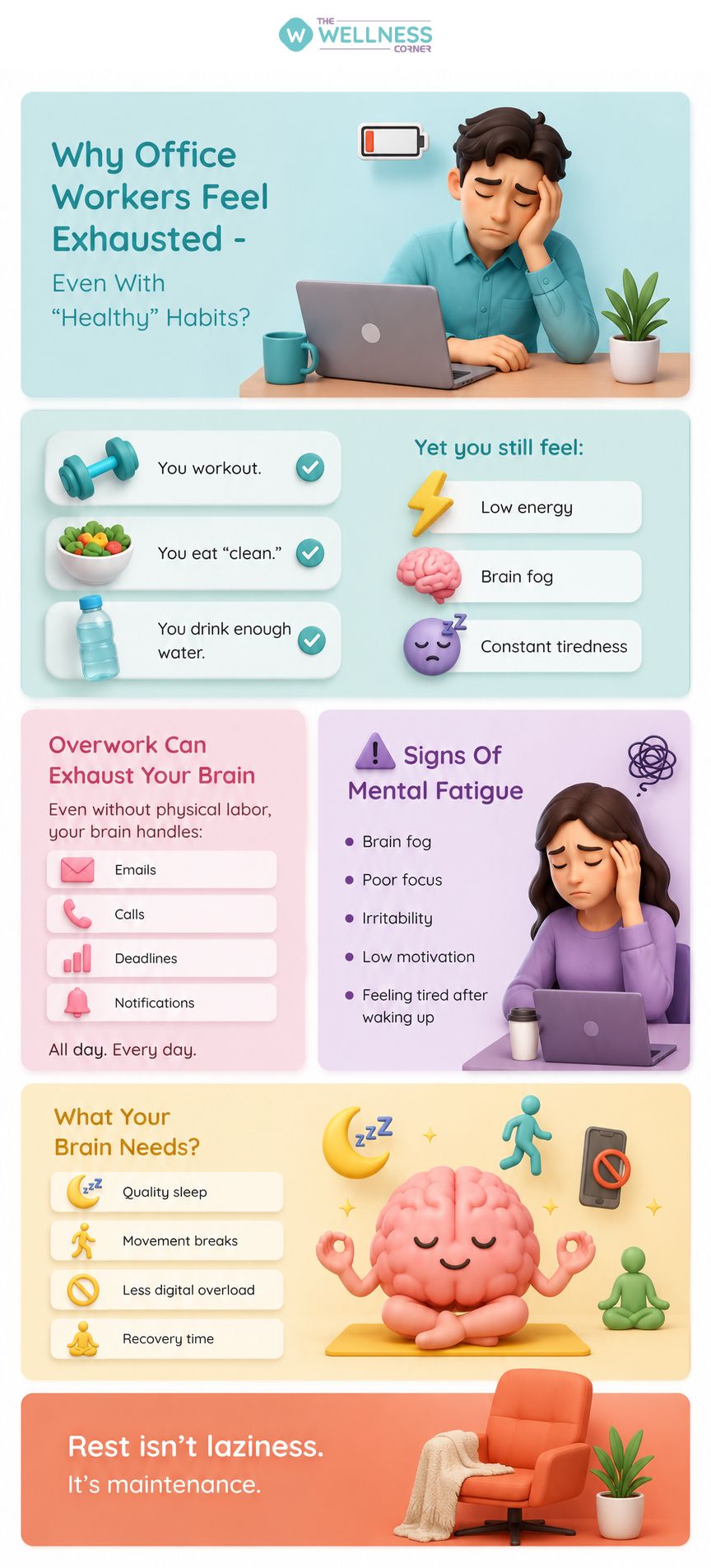
Why Modern Fatigue Looks Different?
When people think about exhaustion, they often imagine physically demanding labor.
But mental fatigue can be equally draining.
Office workers may spend hours:
- Staring at screens
- Attending meetings
- Switching between tasks
- Managing deadlines
- Responding to messages
- Handling constant digital stimulation
Even without physical labor, the brain remains continuously active.
This prolonged mental load can gradually exhaust both the mind and body.
Also Read - No-Mind Meditation: Understanding The Emptiness Beyond Mental Clutter
Healthy Habits Cannot Fully Cancel An Unhealthy Routine
Going to the gym for one hour does not automatically undo:
- 10 hours of sitting
- Poor sleep
- High stress
- Constant screen exposure
- Emotional exhaustion
- Workplace pressure
Many people focus heavily on isolated “healthy habits” while overlooking the overall lifestyle pattern surrounding them.
True wellness depends on how the entire day is structured.

1. Chronic Stress Keeps The Body In Survival Mode
One of the biggest contributors to office fatigue is chronic stress.
Deadlines, performance pressure, financial concerns, workplace competition, and constant connectivity may keep stress hormones elevated for long periods.
The body is designed to handle short-term stress temporarily.
But when stress becomes constant, people may experience:
- Mental exhaustion
- Poor sleep
- Irritability
- Difficulty relaxing
- Low energy levels
Even highly successful professionals can quietly experience burnout.
Also Read: Why Your Energy Levels Are Low And What To Eat About It?
2. Sitting All Day Affects Energy Levels
Many office workers exercise regularly yet remain sedentary for most of the day.
Long periods of sitting may affect:
- Blood circulation
- Posture
- Muscle tension
- Energy balance
The body benefits from frequent movement throughout the day, not just short exercise sessions before or after work.

3. Sleep Quality Is Often Poorer Than People Realize
Many professionals technically sleep for enough hours but still wake up exhausted.
This may happen because sleep quality matters just as much as sleep duration.
Late-night screen use, stress, irregular schedules, and overstimulation can interfere with deep restorative sleep.
Without proper recovery, fatigue builds gradually.
Also Read: Is Too Much Screen Time Harmful To Our Eyes?
4. Mental Overload Drains The Brain
The modern workplace demands constant attention switching.
People often multitask between:
- Emails
- Video calls
- Messages
- Spreadsheets
- Deadlines
- Notifications
The brain is not designed for nonstop digital stimulation without breaks.
This mental overload may contribute to:
- Brain fog
- Poor concentration
- Decision fatigue
- Mental exhaustion
Even simple tasks may begin feeling mentally heavy.

5. “Healthy Eating” Is Sometimes Incomplete
Many individuals consume salads, smoothies, or low-calorie foods yet may still not provide their bodies with enough fuel to maintain healthy energy levels.
Common issues may include:
- Skipping meals
- Undereating protein
- Overconsuming caffeine
- Restrictive dieting
- Inadequate hydration
Sometimes people unintentionally fuel their bodies insufficiently while trying to “eat clean.”
Also Read: 6 High Protein Snacks To Keep In The Office For Your 4 PM Hunger
6. Emotional Stress Also Causes Physical Fatigue
Work fatigue is not always about workload alone.
Emotional strain from:
- Workplace tension
- Relationship stress
- Financial pressure
- Family responsibilities
- Social comparison
Can affect energy levels significantly.
Mental and emotional stress often show up physically within the body.
7. Constant Connectivity Prevents True Rest
Technology has blurred the boundaries between work and personal life.
Many employees continue checking:
- Emails
- Work chats
- Notifications
- Calls
Even after official working hours.
As a result, the brain rarely enters full recovery mode.
People may appear physically rested while remaining mentally overstimulated.
Why “Busy” Is Often Glorified?
Modern work culture frequently celebrates exhaustion as a sign of ambition.
People often feel guilty for:
- Taking breaks
- Resting
- Disconnecting
- Doing nothing productive
But the human brain and body require recovery to function effectively long-term.
Rest is not laziness.
Recovery is part of sustainable productivity.

Signs Your Fatigue May Be More Than “Normal Tiredness”
Many office workers normalize chronic exhaustion until it becomes severe.
Some warning signs include:
- Waking up tired daily
- Difficulty focusing
- Frequent headaches
- Mood swings
- Loss of motivation
- Poor sleep quality
- Feeling emotionally drained
- Relying heavily on caffeine
Persistent fatigue should not always be ignored.
Also Read: 5 Minute Brain Workout To Sharpen Your Mind & Boost Focus
Small Changes That May Help Reduce Workplace Fatigue
Extreme wellness routines are not always necessary.
Often, small consistent adjustments may help support energy levels more sustainably.
1.Move More Frequently During The Day
Short movement breaks may help improve circulation and mental alertness.
2. Protect Sleep Quality
Reducing screen exposure before bed and maintaining consistent sleep routines may support recovery.
3. Take Mental Breaks
The brain benefits from pauses between intense periods of focus.
4. Eat Balanced Meals
Protein, fiber, hydration, and balanced nutrition support more stable energy levels.
5. Set Boundaries Around Work
Disconnecting from work occasionally helps the nervous system recover.
The Bigger Picture: Wellness Is More Than Exercise And Diet
Modern wellness conversations often focus heavily on visible habits like workouts and food choices.
But real health also involves:
- Mental recovery
- Emotional balance
- Stress management
- Sleep quality
- Work-life boundaries
- Social connection
A person may appear physically healthy while quietly struggling with mental exhaustion and burnout.
Understanding this helps create a more realistic definition of wellness.
Sustainable Productivity Requires Recovery
Many professionals believe they need to push harder to overcome fatigue.
Sometimes the opposite is true.
The body and brain often function better when recovery becomes part of the routine instead of an afterthought.
Long-term performance depends not only on effort, but also on restoration.
Support Workplace Wellness With The Wellness Corner
Mental and physical well-being are essential for maintaining energy, focus, and productivity in today’s demanding work environments.
The Wellness Corner offers expert-backed support for stress management, emotional wellness, nutrition, fitness, mindfulness, preventive health, and healthier lifestyle habits to help individuals build sustainable well-being both inside and outside the workplace.
Because healthier employees create healthier workplaces.
Frequently Asked Questions (FAQs)
Leave a Comment

Sign-Up Now & Unlock
₹100 Cashback
Recently Published
Related Articles


Health Checks @ Home
Service
Explore



Follow us on:


© 2026 Truworth Health Technologies Pvt. Ltd.