5 Ways To Protect Yourself From Manipulation
3 months ago
5 minute read.

Have you ever walked away from a conversation feeling confused, guilty, or pressured into doing something you never intended to do? If that sounds familiar, manipulation may have played a role.
Manipulation can happen in personal relationships, workplaces, friendships, and even online. It often isn't obvious. Instead of direct demands, it may involve guilt, emotional pressure, distorted facts, or subtle attempts to influence your decisions. Over time, repeated manipulation can affect your confidence, increase stress, and leave you questioning your own judgment.
The good news is that manipulation becomes much less effective when you recognize it. Learning how to set healthy boundaries, trust your instincts, and communicate confidently can help you protect both your mental well-being and your relationships.
Here are five practical ways to recognize manipulation and respond without losing your confidence or peace of mind.
Also Read - Silent Treatment & Guilt Trips: Workplace And Home Red Flags
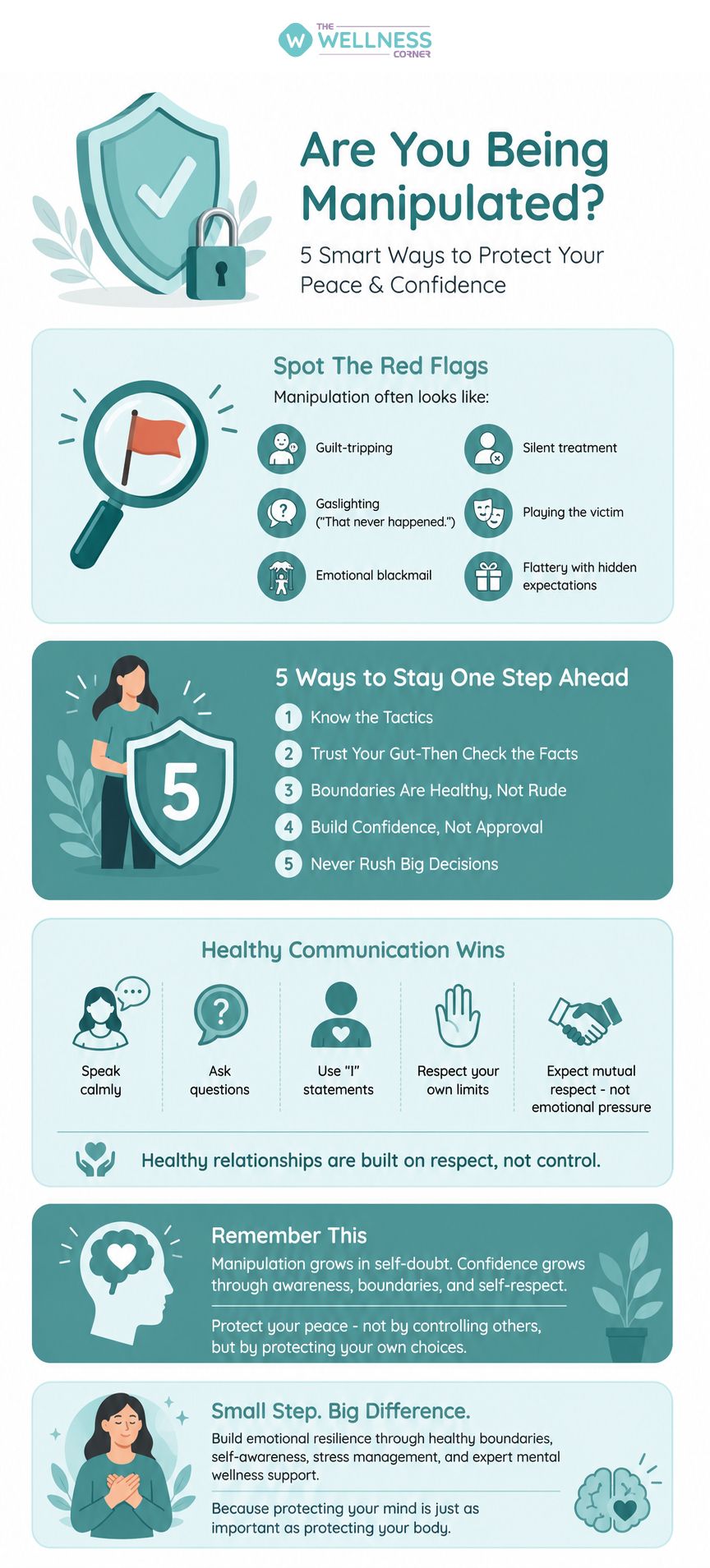
1. Learn To Recognize Common Manipulation Tactics
The first step in protecting yourself is knowing what manipulation can look like.
Manipulation rarely begins with obvious control. What begins as subtle behavior can become increasingly obvious over time.
Some common tactics include:
- Guilt-tripping
- Making you question your own memory, judgment, or perception of reality
- Excessive flattery followed by requests
- Emotional blackmail
- Silent treatment
- Constant criticism that lowers self-confidence
- Playing the victim to avoid responsibility
Recognizing these behaviors early makes it easier to respond thoughtfully instead of reacting emotionally.

2. Trust Your Feelings Without Ignoring The Facts
Many people dismiss their instincts because they worry they are overreacting.
While emotions should not be the only basis for decisions, they can provide useful information. If you consistently leave conversations feeling anxious, guilty, confused, or emotionally drained, take a moment to reflect on why.
Ask yourself:
- Was I pressured into agreeing?
- Did I feel respected during the conversation?
- Was my opinion genuinely considered?
- Am I making this decision because I want to, or because I feel obligated?
These questions encourage greater self-awareness and can help you identify unhealthy communication patterns.
Also Read - From Anxious To Calm: 5 Questions You Can Ask Yourself When Feeling Anxious
3. Set Clear And Healthy Boundaries
Healthy boundaries are one of the most effective ways to reduce opportunities for manipulation.
Clear boundaries express your personal limits and what you feel comfortable with. They also help create healthier relationships built on mutual respect.
Examples include:
- Saying "I need some time to think before deciding."
- Declining requests that exceed your limits.
- Choosing not to engage in emotionally charged conversations until you feel calm.
- Protecting your personal time and energy.
Remember that setting boundaries is not about controlling others. It is about communicating your own limits respectfully and consistently.

4. Strengthen Your Confidence In Decision-Making
Manipulative behavior often succeeds when someone doubts their own judgment.
Building self-confidence makes it easier to make decisions based on your values rather than external pressure.
You can strengthen confidence by:
- Reflecting before responding.
- Gathering information before making important decisions.
- Accepting that saying "no" is sometimes necessary.
- Celebrating small decisions you make independently.
The more you trust your own judgment, the less likely you are to rely on someone else's approval.
Also Read - The Mirror Effect: Using Mirror Gazing To Build Self-Awareness And Confidence
5. Pause Before Responding To Pressure
Manipulation often creates a false sense of urgency.
You may hear phrases such as:
- "You have to decide right now."
- "If you cared, you would do this."
- "Everyone else has already agreed."
Whenever possible, avoid making important decisions under emotional pressure.
Instead, try responses such as:
- "I'd like a little time to consider my decision."
- "I'll get back to you tomorrow."
- "I prefer to consider every option before deciding."
Creating even a short pause allows your emotions to settle and helps you make clearer, more thoughtful decisions.

Signs That A Relationship May Be Becoming Manipulative
Not every disagreement is manipulation, but repeated patterns deserve attention.
Some warning signs include:
- Feeling responsible for someone else's emotions all the time
- Frequently questioning your own memory or judgment
- Feeling guilty for setting reasonable boundaries
- Being pressured to make decisions quickly
- Feeling emotionally exhausted after regular interactions
- Constantly apologizing, even when you have done nothing wrong
Recognizing these patterns early allows you to address concerns before they become more damaging.
Also Read: 7 Signs You Are In A Secure Relationship
Healthy Communication Helps Prevent Manipulation
Strong communication skills make manipulation less effective.
When discussing difficult topics:
- Speak calmly and clearly.
- Use "I" statements to express your perspective.
- Listen without assuming intentions.
- Ask questions when something feels unclear.
- Focus on resolving the issue rather than making personal remarks.
Healthy conversations encourage mutual understanding rather than control.

When To Seek Additional Support?
If manipulation is affecting your confidence, relationships, or emotional well-being, you do not have to manage it alone.
Speaking with a trusted friend, family member, mentor, or qualified mental health professional can provide valuable perspective and support.
Seeking support is a healthy and proactive choice. It is an important step toward protecting your emotional health and building healthier relationships.
Also Read - Creating A Workplace That Supports Mental Health:-Tips For Managers & Employees
Final Thoughts
Manipulation often thrives in uncertainty, guilt, and self-doubt. The more aware you become of unhealthy communication patterns, the easier it becomes to respond with confidence instead of reacting emotionally.
Learning to recognize manipulation, trust your instincts, establish healthy boundaries, and communicate clearly can strengthen both your emotional resilience and your relationships.
Protecting your mental well-being is not about becoming suspicious of everyone around you. It is about developing the confidence to make decisions that align with your values while maintaining relationships built on honesty, respect, and mutual understanding.

Frequently Asked Questions
Leave a Comment

Sign-Up Now & Unlock
₹100 Cashback
Subscribe to our Newsletter!
Get a weekly dose of wellness tips delivered straight to your inbox.
Recently Published
Related Articles


Health Checks @ Home
Service
Explore



Follow us on:


© 2026 Truworth Health Technologies Pvt. Ltd.