The “Dopamine Patch” Lifestyle: Why We Constantly Need Stimulation?
3 months ago
6 minute read.

Many people today struggle with something that once seemed completely normal:
Doing nothing.
A few quiet minutes without stimulation can suddenly feel uncomfortable.
People often reach for:
- Their phone
- Music
- Videos
- Notifications
- Snacks
- Social media
- Background noise
- Constant multitasking
Even without consciously realizing it.
Standing quietly while waiting for an elevator now feels strangely uncomfortable for many people.
A short queue becomes a reason to scroll endlessly.
Even relaxing often includes multiple screens, notifications, and distractions at the same time.
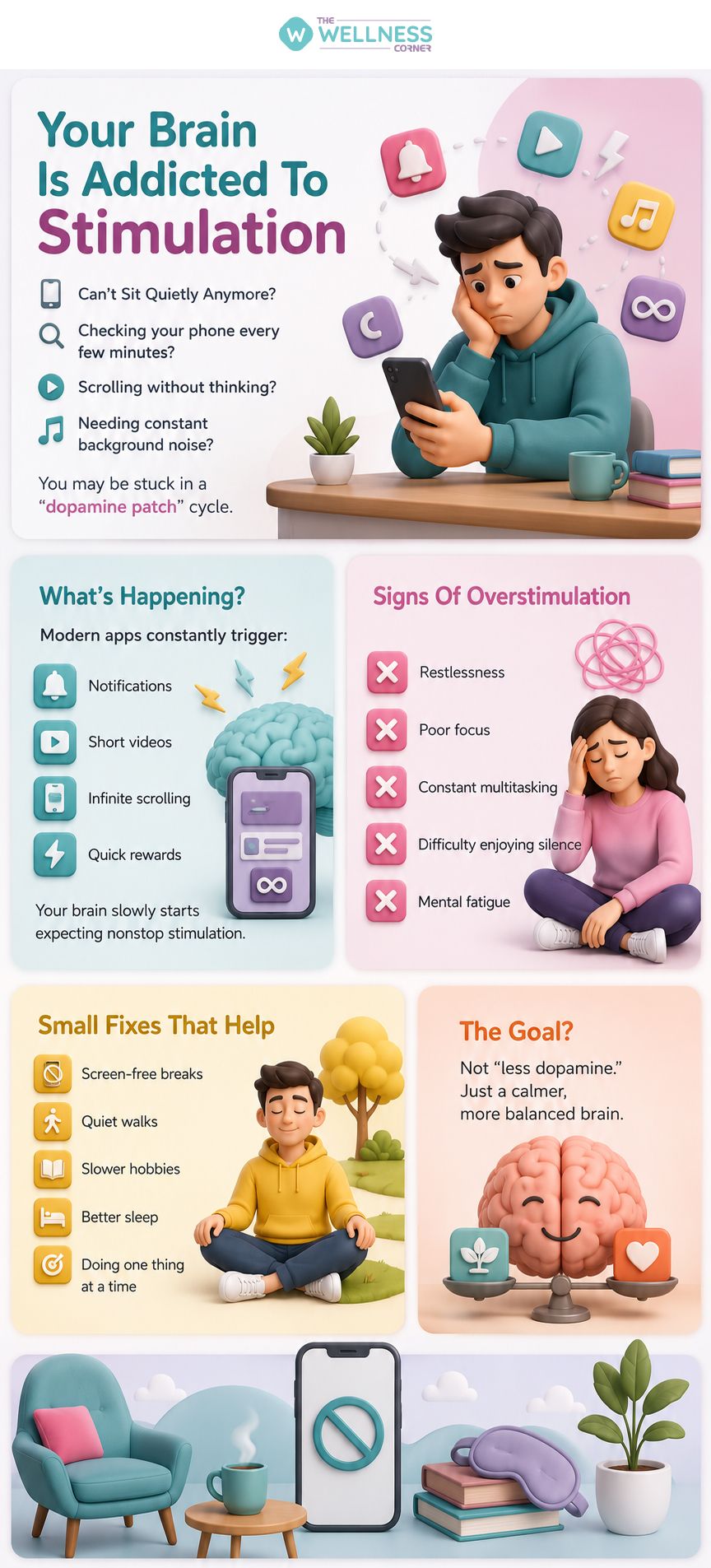
Modern life has created what some people casually describe as a “dopamine patch” lifestyle.
The phrase refers to the growing habit of constantly seeking quick stimulation, entertainment, or mental reward throughout the day.
But why does this happen?
And why does the brain seem to crave nonstop stimulation more than ever before?
The answer involves psychology, technology, modern habits, stress, and the brain’s reward system.
Also Read: Dopamine Fasting (Pleasure Detox)-The Latest Wellness Trend
What Is Dopamine Actually?
Many people mistakenly think of dopamine simply as the brain’s “feel-good” chemical.
But dopamine is more accurately linked to:
- Motivation
- Anticipation
- Reward-seeking
- Learning
- Habit formation
It plays an important role in helping humans pursue activities necessary for survival and progress.
Dopamine may increase in response to experiences such as:
- Food
- Social interaction
- Achievement
- Novelty
- Entertainment
- Likes and notifications
- Unexpected rewards
Importantly, dopamine is not inherently “bad.”
It is a normal and necessary part of human brain function.
The challenge begins when modern environments constantly stimulate these reward pathways without pause.
Why Modern Life Feels So Overstimulating?
The human brain developed under conditions that were vastly different from the highly digital environment we live in today.
Modern technology now provides endless access to:
- Short videos
- Infinite scrolling
- Notifications
- Instant entertainment
- Rapid information
- Online shopping
- Gaming rewards
- Constant communication
The brain receives stimulation faster and more frequently than ever before.
This can gradually shape attention patterns and reward-seeking habits.
The Brain Starts Expecting Constant Input
One major reason quiet moments feel uncomfortable today is that the brain becomes accustomed to continuous stimulation.
When the brain repeatedly receives quick bursts of novelty and entertainment, slower activities may begin to feel less rewarding temporarily.
This is why people sometimes struggle to focus on:
- Reading
- Deep work
- Long conversations
- Silence
- Patience-based tasks
Not because the brain is “damaged,” but because it adapts to repeated patterns.
Why Short-Form Content Feels So Addictive?
Modern digital platforms are carefully designed to hold attention.
Features such as:
- Infinite scrolling
- Autoplay videos
- Quick emotional rewards
- Surprise content
- Notifications
Encourage repeated engagement.
The unpredictability of what comes next may strengthen the brain’s reward anticipation systems.
This is one reason people sometimes spend far longer online than they originally intended.

Why Boredom Feels Uncomfortable Now?
Interestingly, boredom once played an important role in human creativity and reflection.
Quiet moments allowed people to:
- Think deeply
- Process emotions
- Reflect
- Imagine
- Rest mentally
Today, many individuals immediately “patch” boredom with stimulation.
This may include:
- Scrolling social media
- Checking messages
- Watching videos
- Eating out of boredom
- Switching constantly between apps
Over time, the brain may become less comfortable with stillness.
Also Read: How Social Media Is Shaping Youth Health And Wellness?
Why Constant Stimulation Can Become Mentally Exhausting?
While stimulation itself is not always harmful, nonstop input may contribute to feelings of:
- Mental fatigue
- Restlessness
- Difficulty concentrating
- Sleep disruption
- Emotional overwhelm
- Reduced attention span
The brain rarely gets opportunities for true mental rest anymore.
Even downtime often includes digital engagement.

The Dopamine Cycle Is Often About Anticipation, Not Satisfaction
One fascinating aspect of dopamine is this:
The brain often becomes more attached to seeking rewards than actually enjoying them fully.
For example:
- People may keep refreshing apps without finding meaningful satisfaction.
- Or continue scrolling despite not feeling happier afterward.
- The cycle becomes about chasing the next small reward rather than genuine fulfillment.
Why Emotional Stress Increases Stimulation-Seeking
Stress and emotional exhaustion may also increase the desire for quick dopamine-driven habits.
People often seek stimulation when they feel:
- Anxious
- Lonely
- Overwhelmed
- Emotionally tired
- Mentally drained
Also Read: 10 Things You Can Do When You Start Feeling Lonely
Quick distractions may temporarily reduce discomfort.
This is why many people turn to:
- Food
- Shopping
- Streaming
- Social media
- Gaming
- Phone use
During stressful periods.
Is Dopamine “Detox” Actually Necessary?
The phrase “dopamine detox” has become very popular online.
But the concept is often misunderstood.
Humans cannot completely “remove” dopamine because the brain naturally needs it.
The healthier goal is usually reducing excessive overstimulation and improving balance rather than eliminating pleasure or enjoyment entirely.
Healthy dopamine-producing activities may include:
- Exercise
- Meaningful relationships
- Learning
- Creative hobbies
- Nature exposure
- Goal achievement
- Restful sleep
The issue is usually excessive instant stimulation rather than dopamine itself.

Signs You May Be Overstimulated
Some people may notice signs such as:
- Difficulty sitting quietly
- Constant urge to check the phone
- Feeling restless during slow activities
- Reduced focus
- Needing entertainment during every task
- Difficulty relaxing without screens
- Trouble concentrating on long-form content
These habits are increasingly common in modern lifestyles.
How To Reduce Constant Stimulation Without Becoming Extreme?
Balance matters more than perfection.
For most individuals, avoiding technology entirely is neither practical nor sustainable.
Instead, small intentional changes may help create healthier mental balance.
1. Practice Small Moments Of Silence
Even a few minutes without stimulation may help the brain slow down gradually.
This could include:
- Walking without headphones
- Quiet breaks
- Mindful breathing
- Eating without screens
2. Reduce Multitasking
Modern brains are often overloaded with simultaneous input.
Focusing on a single task at a time may help improve concentration and lower feelings of mental fatigue.
Also Read: 10 Reasons Why You Should Stop Multitasking
3. Create Screen-Free Spaces
Some people benefit from reducing device use during:
- Meals
- Before sleep
- Conversations
- Morning routines
Small boundaries may help improve awareness and attention.
4. Reintroduce Slower Activities
Activities such as:
- Reading
- Journaling
- Gardening
- Art
- Exercise
- Nature walks
May help the brain reconnect with slower forms of reward and focus.
5. Improve Sleep Quality
Constant stimulation may interfere with healthy sleep patterns.
Reducing late-night screen exposure may help improve:
- Rest
- Recovery
- Mental clarity
- Attention
Why This Conversation Matters Beyond Productivity?
The issue is not only about attention span or efficiency.
Constant overstimulation may also affect:
- Mental well-being
- Emotional regulation
- Stress levels
- Relationships
- Self-awareness
Many people rarely experience uninterrupted quiet anymore.
Over time, this can influence a person’s ability to stay emotionally balanced and mentally calm.
The Bigger Picture: The Brain Was Not Designed For Endless Input
Modern technology brings incredible benefits.
But human brains were not originally built for nonstop notifications, constant entertainment, and uninterrupted stimulation every waking hour.
The goal is not rejecting technology completely.
It is learning how to use it intentionally without allowing constant stimulation to dominate everyday life.
Sometimes the healthiest thing the brain needs is not another distraction, but a moment of genuine pause.
Support Mental Wellness With The Wellness Corner
Stress, overstimulation, screen overload, emotional fatigue, and modern lifestyle habits can deeply affect overall well-being.
The Wellness Corner offers expert-backed support for mindfulness, emotional wellness, stress management, preventive care, fitness, nutrition, and healthier lifestyle habits to help individuals build better mental balance in a highly stimulating world.
Because mental wellness deserves attention too.
Frequently Asked Questions (FAQs)
Leave a Comment

Sign-Up Now & Unlock
₹100 Cashback
Subscribe to our Newsletter!
Get a weekly dose of wellness tips delivered straight to your inbox.
Recently Published
Related Articles


Health Checks @ Home
Service
Explore



Follow us on:


© 2026 Truworth Health Technologies Pvt. Ltd.