The Everyday Habit Psychology Warns Can Slowly Harm Relationships
8 hours ago
5 minute read.

Healthy relationships rarely fall apart overnight. More often, they change gradually through repeated interactions, everyday habits, and patterns of communication that seem harmless at first. Small behaviors, when repeated over time, can slowly weaken trust, emotional closeness, and mutual understanding.
According to psychology, one of the most damaging habits in relationships is making assumptions instead of communicating openly. Whether it's assuming what your partner is thinking, expecting them to understand your feelings without explanation, or interpreting their actions without asking for clarification, this habit can quietly create emotional distance.
Fortunately, this behavior is something people can recognize and gradually change. Understanding why assumptions are harmful is the first step toward building stronger, healthier relationships.
Also Read: 7 Signs You Are In A Secure Relationship
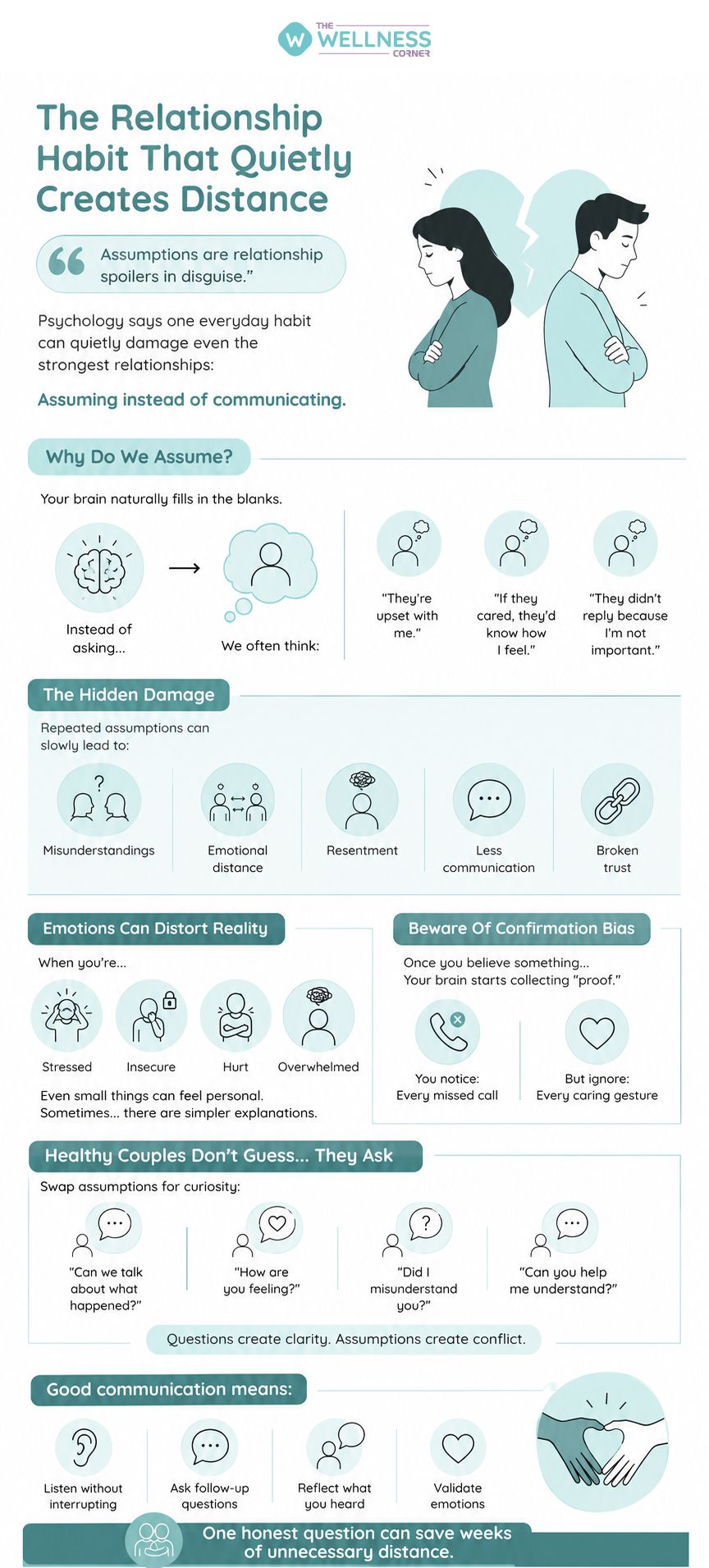
Why Do We Make Assumptions?
The human brain tends to fill in missing details automatically.
Instead of asking questions, we often rely on past experiences, emotions, or personal expectations to explain another person's behavior.
Common examples include:
- "They're ignoring me because they're upset."
- "If they truly cared, they wouldn't need me to explain how I feel."
- "They didn't call because I'm not important."
Although these thoughts may feel convincing, they are often based on interpretation rather than facts.
Also Read: Robbed Of Happiness? Stuck Between Reality And Expectations?
The Hidden Cost Of Assumptions
Assumptions may seem minor, but they can influence how people respond to each other.
Over time, this habit may lead to:
- Misunderstandings
- Unnecessary arguments
- Emotional distance
- Reduced trust
- Resentment
Many relationship conflicts begin not because of what actually happened, but because of what one person believed happened.

When Expectations Replace Communication?
Every relationship includes expectations.
Problems arise when those expectations remain unspoken.
For example, one partner may expect emotional support after a difficult day, while the other believes giving space is more helpful.
Neither person has bad intentions. Confusion often arises because neither person clearly expresses their needs.
Psychology consistently shows that healthy relationships rely on direct communication rather than mind reading.
Emotional Filters Change Perception
Our emotional state affects how we interpret situations.
When people feel:
- Stressed
- Insecure
- Hurt
- Anxious
- Overwhelmed
they may be more likely to assume negative intentions.
A delayed text message suddenly feels like rejection.
A brief conversation sounds like criticism.
A forgotten task appears intentional.
These interpretations may not accurately reflect reality.
Also Read - From Anxious To Calm: 5 Questions You Can Ask Yourself When Feeling Anxious

Confirmation Bias Makes It Worse
Psychologists describe confirmation bias as our tendency to notice information that supports our existing beliefs.
If someone already believes their partner is becoming distant, they may focus only on behaviors that reinforce that belief while overlooking signs of affection or care.
This creates a cycle where assumptions become increasingly convincing despite limited evidence.
Healthy Relationships Ask Questions
Strong relationships are built through curiosity rather than conclusions.
Instead of assuming, healthy partners ask questions such as:
- "Can we talk about what happened?"
- "How were you feeling today?"
- "Did I misunderstand something?"
- "Could you explain what you meant by that?"
These conversations create opportunities for clarity instead of conflict.
Also Read: Relationship Strengthening Conversations Every Couple Needs To Have

Listening Matters Just As Much
Communication isn't only about speaking.
Active listening helps people understand each other's experiences without immediately defending themselves or making assumptions.
Effective listening includes:
- Paying full attention
- Avoiding interruptions
- Asking follow-up questions
- Reflecting what you've heard
- Validating emotions
Feeling heard often strengthens emotional connection.
Small Assumptions Can Become Bigger Problems
Relationship damage rarely comes from one conversation.
Instead, repeated misunderstandings may gradually reduce emotional safety.
Over time, partners may become less willing to share vulnerable thoughts because they expect to be misunderstood.
This emotional distance often develops slowly, making it difficult to recognize until communication has significantly declined.
Also Read: 10 Signs You Are Not Ready For A Relationship

Building Better Communication Habits
Fortunately, replacing assumptions with healthier communication is possible.
1. Pause Before Reacting
When emotions rise, avoid making immediate conclusions.
Give yourself time to consider other explanations.
2. Clarify Instead Of Guessing
If something feels unclear, ask respectfully rather than assuming the worst.
3. Express Your Needs Clearly
Partners cannot always predict what you need.
Communicating directly reduces misunderstandings.
4. Check Your Emotional State
Stress, anxiety, and fatigue can influence how situations are interpreted.
Taking a moment to reflect before responding often leads to more balanced conversations.
5. Focus On Facts
Separate observable behavior from personal interpretation.
For example:
Fact:
"They haven't replied for three hours."
Assumption:
"They don't care about me."
Recognizing this difference improves communication.
Relationships Thrive On Understanding
No couple communicates perfectly all the time.
What matters most is the willingness to understand each other.
Psychological research consistently shows that couples who communicate openly, resolve misunderstandings early, and remain curious about each other's experiences tend to build stronger emotional bonds.
Open and honest conversations help build stronger trust and a greater sense of emotional safety.

Conclusion
Assuming instead of communicating may appear insignificant, but over time it can quietly affect the strength of a relationship.
Instead of guessing another person's intentions, choosing curiosity, patience, and open communication creates opportunities for deeper understanding.
Healthy relationships aren't built on perfect communication. They're built on people who are willing to ask, listen, clarify, and grow together.
Sometimes, one honest conversation can prevent weeks of unnecessary misunderstanding.
Frequently Asked Questions
Leave a Comment

Sign-Up Now & Unlock
₹100 Cashback
Subscribe to our Newsletter!
Get a weekly dose of wellness tips delivered straight to your inbox.
Recently Published
Related Articles


Health Checks @ Home
Service
Explore



Follow us on:


© 2026 Truworth Health Technologies Pvt. Ltd.