When Love Turns Into Conflict: Understanding Mother-Daughter Struggles
4 months ago
5 minute read.

The bond between a mother and daughter is often described as one of the closest relationships in life.
It can be filled with love, support, protection, and deep emotional connection.
But it can also become one of the most emotionally complicated relationships a person experiences.
Many mothers and daughters genuinely care for each other, yet still find themselves trapped in repeated misunderstandings, emotional distance, criticism, or conflict.
- One conversation turns into an argument.
- Small disagreements become deeply personal.
- Old emotional wounds continue resurfacing.
Over time, both sides may feel hurt, misunderstood, frustrated, or emotionally exhausted.
The difficult truth is that love alone does not automatically prevent conflict.
Mother-daughter struggles are more common than many people realize, and they often involve years of emotional history, expectations, generational differences, communication patterns, and personal insecurities.
Understanding why these conflicts happen can help create more empathy, healthier boundaries, and stronger emotional connection over time.
Also Read: Motherhood - A Beautiful Journey
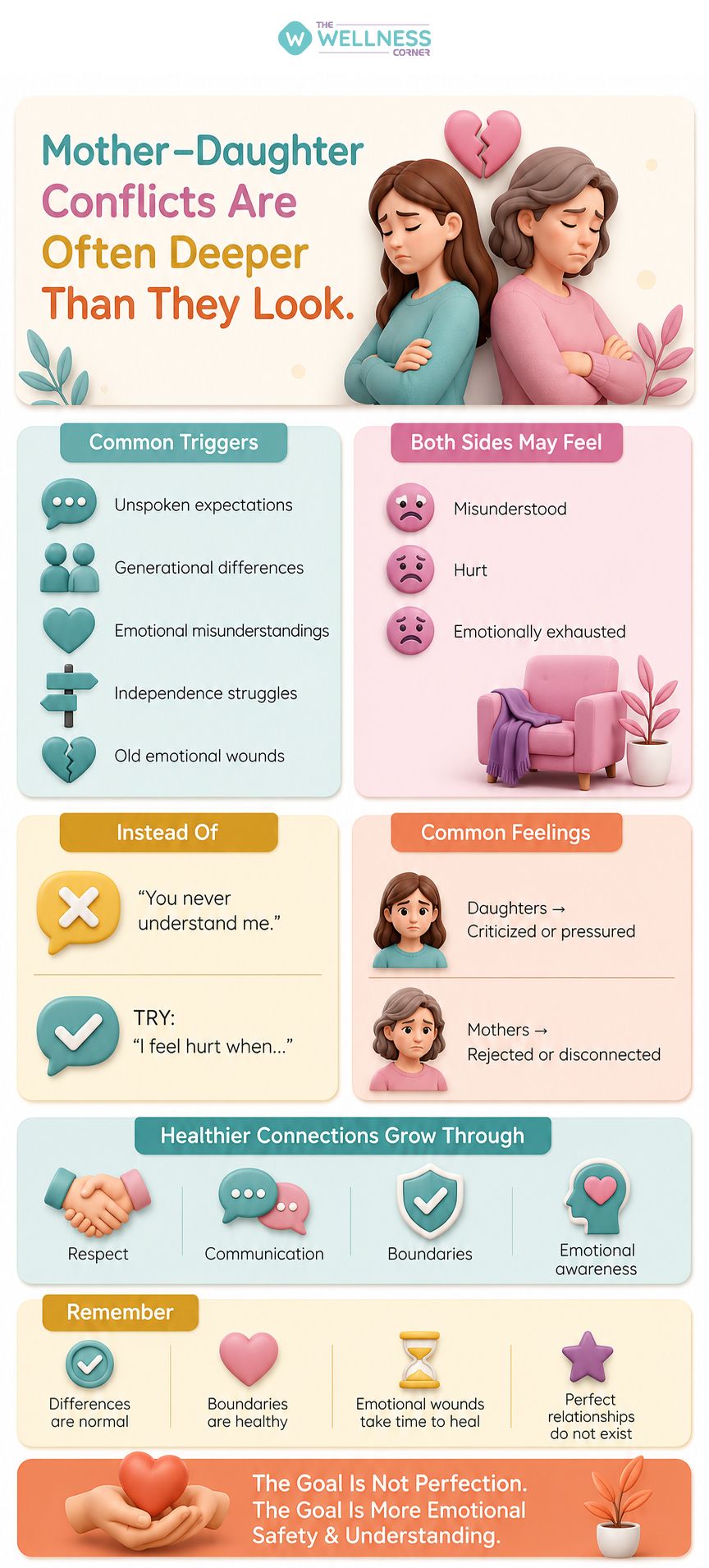
Why Mother-Daughter Relationships Carry So Much Emotional Weight?
Unlike many other relationships, the mother-daughter connection often begins with deep emotional dependence from childhood.
Mothers are usually among the first people daughters look to for:
- Safety
- Validation
- Guidance
- Affection
- Approval
As daughters grow older, however, the relationship naturally changes.
This transition is not always easy for either person.
The daughter may seek independence and personal identity, while the mother may struggle with changing roles, emotional distance, or unmet expectations.
This shift can quietly create tension over time.
Also Read: Take Care Of Yourself During Family Arguments: 5 Tips
Common Reasons Mother-Daughter Conflicts Develop
Every family dynamic is different, but certain patterns appear frequently in strained mother-daughter relationships.
1. Expectations That Are Never Clearly Communicated
Unspoken expectations often create disappointment.
A mother may expect closeness, frequent communication, or certain life choices.
A daughter may expect emotional understanding, acceptance, or less criticism.
When expectations remain unspoken, both individuals may feel hurt without fully understanding why.

2. Generational Differences
Different generations are shaped by different experiences, social norms, parenting styles, and emotional beliefs.
For example:
- One generation may prioritize stability and sacrifice.
- Another may prioritize mental health, independence, or personal boundaries.
These differences can sometimes lead to judgment or misunderstanding on both sides.
Also Read - Mental Health First Aid: Why It Should Be As Common As CPR?
3. Communication Styles That Trigger Emotional Reactions
Some families communicate openly.
Others rely on silence, indirect comments, criticism, guilt, or emotional avoidance.
A simple sentence may carry years of emotional history underneath it.
For example:
- “What are you doing with your life?”
- “You never understand me.”
- “You have changed.”
These statements often reflect deeper emotional needs rather than surface-level frustration.

4. Difficulty Accepting Independence
As daughters grow older, they naturally begin making independent decisions related to:
- Career
- Relationships
- Lifestyle
- Parenting
- Personal values
Some mothers may struggle emotionally with losing influence or feeling less needed.
At the same time, daughters may feel overly controlled or emotionally judged.
This tension can become especially strong during adulthood.
5. Unresolved Emotional Wounds
Past emotional experiences do not simply disappear with time.
Childhood criticism, emotional neglect, favoritism, pressure, or unresolved pain may continue affecting adult relationships.
Sometimes present-day conflicts are actually connected to emotional wounds from years earlier.
Without healing, the same arguments often repeat in different forms.
Also Read: 11 Small Gestures That Mean The World To Your Aging Parents
Why Small Arguments Often Feel So Intense?
Mother-daughter conflicts can feel unusually emotional because the relationship carries deep psychological meaning.
Words from family members often affect people more strongly than words from strangers.
Even minor disagreements may trigger:
- Rejection
- Guilt
- Disappointment
- Fear
- Emotional defensiveness
This is why seemingly small issues sometimes escalate quickly.
The Emotional Impact On Both Sides
Conflict affects both mothers and daughters emotionally.
Daughters May Feel:
- Misunderstood
- Criticized
- Emotionally drained
- Pressured
- Unaccepted
Mothers May Feel:
- Unappreciated
- Disconnected
- Worried
- Rejected
- Emotionally distant
In many situations, both individuals are hurting while struggling to express vulnerability clearly.

Social And Cultural Expectations Add More Pressure
In many cultures, mother-daughter relationships are expected to remain naturally close and emotionally perfect.
This creates additional guilt when conflict exists.
People may feel ashamed discussing family struggles openly because society often romanticizes family relationships.
But difficult family dynamics are far more common than most people admit.
Recognizing this can reduce feelings of isolation.
How Communication Can Slowly Improve The Relationship?
Healthy communication does not happen overnight, especially when years of emotional tension exist.
However, small changes may gradually improve connection.
1.Listen Without Preparing A Defense
Many arguments escalate because both people focus more on defending themselves than truly listening.
Also Read: Are You Truly Listening? Signs You Might Be A Bad Listener
2. Avoid Bringing Up Every Past Mistake
Repeatedly reopening old wounds often prevents emotional healing.
3. Focus On Feelings Instead Of Blame
Saying:
“I feel hurt when…”
is often more productive than:
“You always…”
4. Respect Emotional Boundaries
Healthy closeness still requires personal space and emotional respect.

Healing Does Not Always Mean Perfect Agreement
A healthier relationship does not mean both people suddenly think alike.
Differences in personality, values, and opinions may still exist.
The goal is not perfection.
The goal is creating more respect, emotional safety, and understanding within the relationship.
Sometimes healing simply means reducing emotional damage and communicating with greater compassion.
When Professional Support May Help?
Some mother-daughter conflicts become deeply emotionally exhausting over time.
In certain situations, counseling or therapy may help individuals:
- Understand emotional patterns
- Improve communication
- Process unresolved pain
- Build healthier boundaries
Reaching out for help should not be viewed as a weakness or personal shortcoming.
It may simply reflect a desire for healthier emotional connection.
The Bigger Picture: Love And Conflict Can Exist Together
One of the hardest truths about family relationships is that love and conflict can exist simultaneously.
People may deeply care for each other while still struggling emotionally.
Understanding this complexity helps reduce black-and-white thinking.
Mother-daughter relationships often evolve throughout life.
With awareness, communication, empathy, and emotional growth, even strained relationships may gradually improve over time.
Support Emotional Wellness With The Wellness Corner
Mental wellness and healthy family connections are both essential parts of overall health and quality of life.
The Wellness Corner offers expert-backed support for emotional wellness, stress management, mental well-being, lifestyle balance, and healthier daily habits to help individuals build stronger emotional resilience and healthier relationships.
Because caring for emotional well-being is equally important as maintaining physical health.
Frequently Asked Questions (FAQs)
Leave a Comment

Sign-Up Now & Unlock
₹100 Cashback
Subscribe to our Newsletter!
Get a weekly dose of wellness tips delivered straight to your inbox.
Recently Published
Related Articles


Health Checks @ Home
Service
Explore



Follow us on:


© 2026 Truworth Health Technologies Pvt. Ltd.