What Happens To Your Brain If You Are Working Too Much?
4 months ago
5 minute read.

Nowadays, being busy is often treated like an achievement.
Long work hours, constant notifications, packed schedules, and working late into the night have become increasingly normalized. Many people proudly describe themselves as “always working,” believing nonstop productivity is the key to success.
But while overworking may appear productive on the surface, the brain often pays a hidden price.
The human brain is not designed to operate under constant pressure without adequate rest, recovery, sleep, and emotional balance.
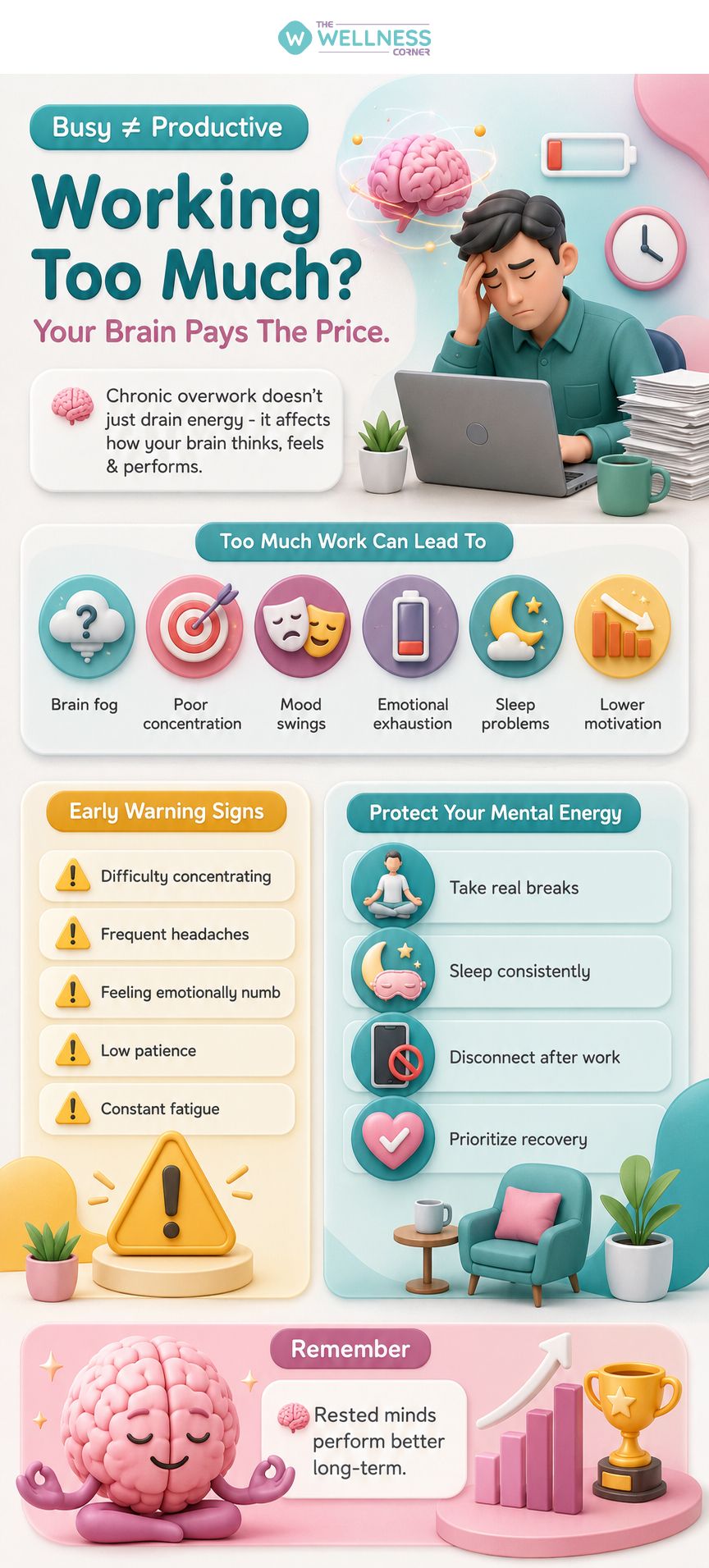
When workloads become excessive for prolonged periods, the effects may begin showing up mentally, emotionally, and even physically.
People may notice:
- Mental exhaustion
- Difficulty concentrating
- Memory problems
- Mood changes
- Poor sleep
- Irritability
- Reduced motivation
Over time, chronic overwork can affect how the brain functions, processes stress, regulates emotions, and maintains overall mental well-being.
Understanding these effects is important because burnout rarely happens overnight.
It often develops slowly and quietly.
Also Read: 5 Minute Brain Workout To Sharpen Your Mind & Boost Focus
Why The Brain Needs Recovery Time?
The brain is constantly active.
It processes information, regulates emotions, supports decision-making, stores memories, and helps manage attention throughout the day.
Just like muscles need recovery after physical strain, the brain also requires periods of rest.
Sleep, relaxation, social connection, movement, and downtime all help the brain recover from daily stress.
Without sufficient recovery, mental fatigue gradually builds up.
What Happens When You Work Too Much?
Working excessively for short periods occasionally may not always be harmful.
However, chronic overworking without proper balance can affect multiple areas of brain function.

1. Mental Fatigue Begins To Build
One of the earliest signs of overwork is cognitive exhaustion.
The brain becomes overloaded after prolonged concentration, multitasking, and stress exposure.
This may lead to:
- Brain fog
- Slower thinking
- Reduced creativity
- Poor focus
- Difficulty making decisions
Activities that used to feel easy may begin to seem mentally draining or harder to manage.
Also Read: Is Anxiety Brain Fog Real? | Everything You Need To Know
2. Stress Hormones Remain Elevated
When the brain perceives ongoing pressure, the body releases stress hormones such as cortisol.
Short-term stress can sometimes improve alertness temporarily.
But when stress becomes chronic, consistently elevated cortisol levels may affect:
- Mood
- Sleep quality
- Concentration
- Emotional regulation
- Memory
The brain functions best when periods of stress are balanced with periods of recovery.

3. Memory And Concentration May Decline
Overworked individuals often notice increasing forgetfulness.
For example:
- Forgetting meetings
- Losing focus during conversations
- Struggling to absorb information
- Making avoidable mistakes
Mental overload reduces the brain’s ability to process and retain information efficiently.
Constant multitasking may worsen this effect further.
Also Read: How To Focus At The Workplace?
4. Emotional Regulation Becomes Harder
Exhausted brains often struggle to regulate emotions effectively.
People may become:
- More irritable
- Emotionally reactive
- Impatient
- Anxious
- Easily overwhelmed
Small frustrations may suddenly feel much bigger than usual.
This is not simply “being dramatic.”
Mental exhaustion genuinely affects emotional processing.
5. Sleep Quality Often Gets Worse
Ironically, overworked people may feel exhausted while still struggling to sleep properly.
Stress and mental overstimulation can interfere with:
- Falling asleep
- Staying asleep
- Deep restorative sleep
Poor sleep then worsens concentration, mood, energy, and stress tolerance the next day.
This creates a difficult cycle.
Also Read: Five Warning Signs That Your Lack Of Sleep Means It’s Time To Seek Help
6. Creativity And Problem-Solving Decline
The brain needs space to think creatively.
Constant pressure and nonstop work can reduce mental flexibility and innovative thinking.
This is why some people suddenly find solutions while:
- Walking
- Relaxing
- Taking breaks
- Showering
- Traveling
Downtime is not laziness.
It often supports clearer thinking.
7. Burnout May Develop Over Time
Burnout is more than simple tiredness.
It is a state of emotional, mental, and physical exhaustion linked to prolonged stress.
Burnout may involve:
- Emotional detachment
- Lack of motivation
- Reduced performance
- Mental exhaustion
- Cynicism toward work
- Feeling emotionally numb
Many people ignore early warning signs until burnout becomes severe.

Why Modern Work Culture Makes This Worse?
Technology has blurred the line between work and personal life.
Many employees now remain mentally connected to work even after office hours through:
- Emails
- Messages
- Notifications
- Video calls
- Social media communication
The brain rarely gets a true pause.
Remote work flexibility has benefits, but it may also increase difficulty separating work from rest.
High Achievement Does Not Always Protect Mental Health
Many high-performing individuals believe they can “push through” exhaustion indefinitely.
But the brain has limits regardless of ambition, intelligence, or motivation.
In fact, highly driven individuals sometimes ignore warning signs the longest because productivity becomes deeply tied to self-worth.
Rest is often wrongly viewed as weakness instead of a biological necessity.
Signs Your Brain May Need A Break
The brain often signals overload before complete burnout occurs.
Common warning signs include:
- Constant fatigue
- Difficulty concentrating
- Feeling emotionally drained
- Loss of motivation
- Frequent headaches
- Poor sleep
- Increased irritability
- Forgetfulness
- Reduced patience
Recognizing these signals early may help prevent more serious mental exhaustion later.
How To Support Brain Health While Working?
Maintaining productivity does not require constant self-exhaustion.
Small habits may help support mental well-being more sustainably.
1.Prioritize Sleep
Sleep plays a critical role in memory, emotional regulation, and cognitive recovery.
2. Take Short Mental Breaks
Brief pauses during the workday may improve concentration and reduce mental fatigue.
3. Move Your Body Regularly
Physical activity supports blood flow, stress reduction, and mental clarity.
4. Set Boundaries Around Work Hours
Constant availability may increase long-term mental strain.
5. Allow Time For Non-Productive Activities
Relaxation, hobbies, social connection, and quiet moments all help support brain recovery.
The Bigger Picture: Productivity Should Not Cost Mental Health
Modern culture often celebrates overworking while ignoring its psychological effects.
But true long-term success requires sustainability.
A constantly exhausted brain cannot function at its best indefinitely.
Protecting mental well-being is not about avoiding ambition.
It is about understanding that human performance depends on balance, recovery, and emotional health alongside productivity.
Sometimes stepping back briefly is what allows people to function better long-term.
Support Your Mental Wellness With The Wellness Corner
Mental well-being is an essential part of overall health, especially in today’s high-pressure work environments.
The Wellness Corner offers expert-backed support for emotional wellness, stress management, mindfulness, fitness, nutrition, preventive health, and healthier lifestyle habits to help individuals maintain balance in both personal and professional life.
Because sustainable success begins with a healthier mind.
Frequently Asked Questions (FAQs)
Leave a Comment

Sign-Up Now & Unlock
₹100 Cashback
Subscribe to our Newsletter!
Get a weekly dose of wellness tips delivered straight to your inbox.
Recently Published
Related Articles


Health Checks @ Home
Service
Explore



Follow us on:


© 2026 Truworth Health Technologies Pvt. Ltd.