Why Does The Same Maggi In The Mountains Taste Better?
4 months ago
5 minute read.
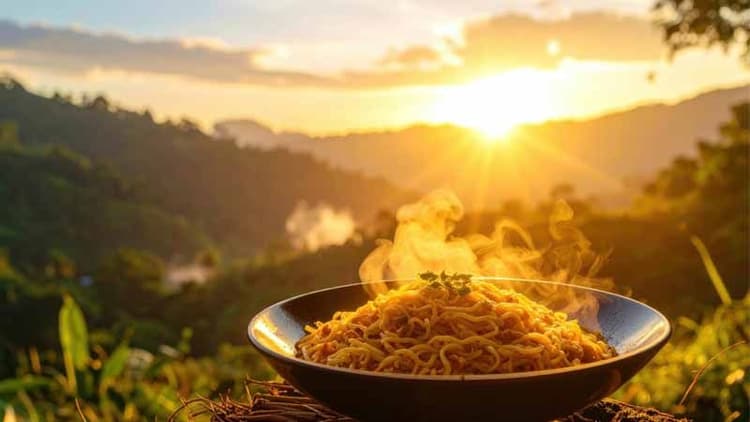
There is something strangely magical about eating a hot bowl of Maggi in the mountains.
Whether it is during a chilly hill station trip, a rainy roadside stop, or a trekking break surrounded by clouds, many people feel the same thing:
“The Maggi here tastes so much better.”
What makes this interesting is that the noodles themselves are usually exactly the same.
- Same packet.
- Same masala.
- Same ingredients.
Yet somehow, mountain Maggi often feels more satisfying, comforting, and unforgettable compared to the one made at home.
So what exactly is happening?
Is it just imagination, or does science actually explain why food tastes different in certain environments?
The answer turns out to be surprisingly fascinating.
The experience involves a mix of:
- Psychology
- Weather
- Temperature
- Hunger
- Emotions
- Memory
- Surroundings
- Human senses
Understanding this connection reveals how deeply our environment shapes the way we experience food.
Also Read: Wai Wai Noodles Or Maggi Noodles - Which Is Better?
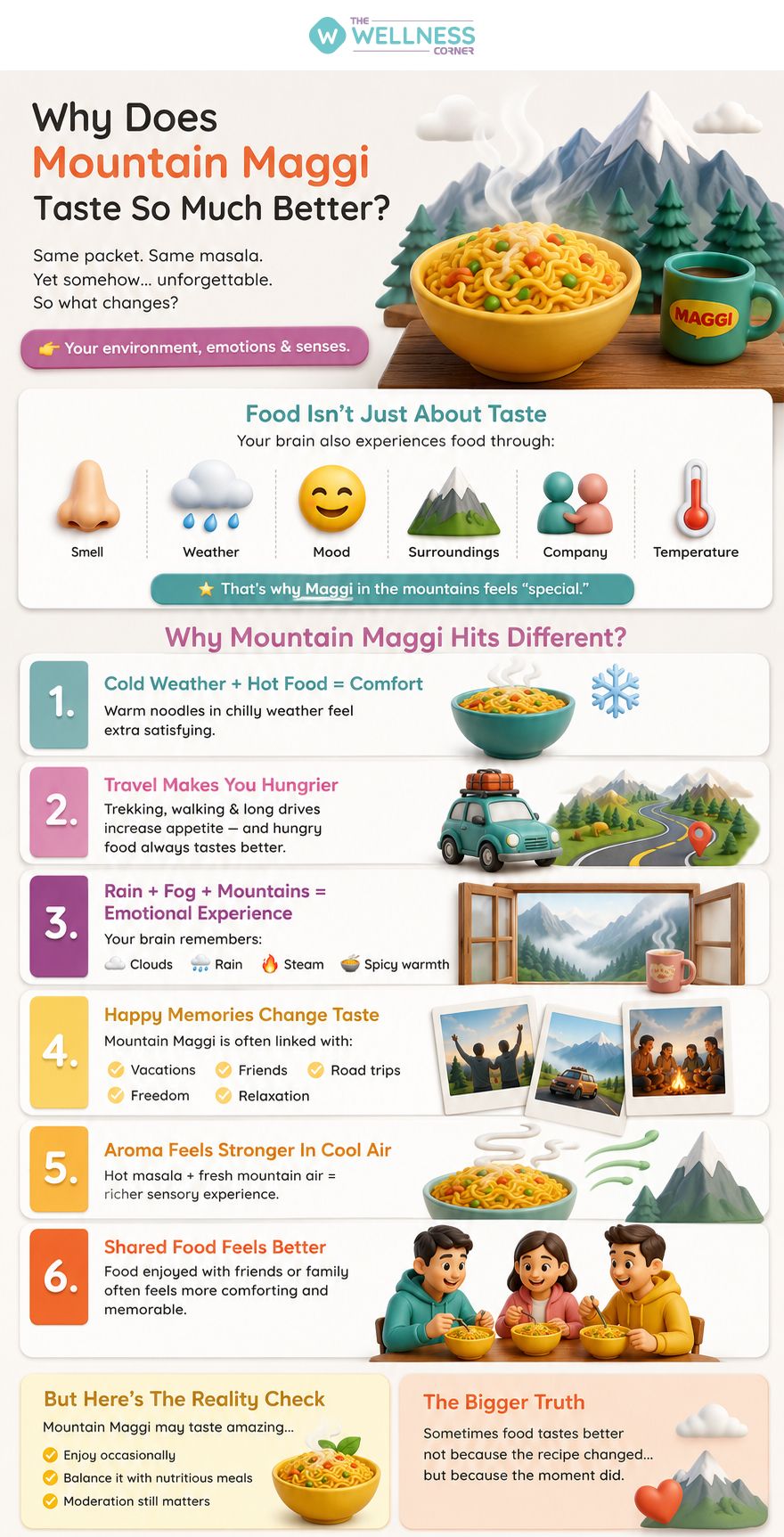
Food Is Not Just About Taste Buds
Many people assume taste comes only from the tongue.
But food experiences are actually influenced by multiple senses working together.
These include:
- Smell
- Temperature
- Texture
- Visual surroundings
- Mood
- Emotions
- Sound
- Physical environment
This is why the exact same meal may feel completely different depending on where and how it is eaten.
Mountain environments create a powerful sensory experience that changes how the brain perceives comfort foods like Maggi.

1. Cold Weather Makes Warm Foods Feel More Comforting
One of the biggest reasons mountain Maggi feels better is temperature contrast.
When the body feels cold, warm foods naturally become more satisfying.
Hot noodles, steam, spices, and soup-like textures may feel especially comforting in chilly weather.
The brain often associates warmth with:
- Comfort
- Safety
- Relaxation
- Relief
This emotional response can intensify enjoyment significantly.
2. Fresh Mountain Air Changes The Experience
Mountain regions often have:
- Cleaner air
- Reduced pollution
- Natural surroundings
- Cooler temperatures
These environmental changes may indirectly influence how refreshed people feel physically and mentally.
Relaxed environments often improve the overall eating experience.
Also Read - Why Immunity Is Struggling In 2025: Pollution, Stress & Urban Lifestyles
3. Hunger Is Usually Higher During Travel And Trekking
Food almost always tastes better when people are genuinely hungry.
During mountain trips, individuals often:
- Walk more
- Trek
- Climb
- Travel for long hours
- Spend time outdoors
Physical activity increases energy expenditure, which may naturally increase appetite.
This heightened hunger can make simple foods feel unusually delicious.

4. Emotions And Memories Influence Taste More Than People Realize
One of the strongest ingredients in mountain Maggi is actually emotion.
People often consume it during:
- Vacations
- Road trips
- Friend gatherings
- Adventure travel
- Rainy weather
- Bonfire evenings
The brain strongly connects food with emotional experiences.
Also Read: Vacation Now! How To Keep Your Kids Engaged
Over time, Maggi becomes linked to:
- Freedom
- Travel excitement
- Nostalgia
- Friendship
- Relaxation
This emotional connection may significantly affect perceived taste.
Nostalgia Can Literally Affect Flavor Perception
Psychologists have long studied how memories shape food experiences.
Foods connected with happy moments often feel more enjoyable later because the brain recalls the associated emotions alongside the taste.
This is why “mountain Maggi” becomes more than just noodles.
It becomes an experience.

5. The Environment Around You Matters
Imagine eating Maggi:
In traffic after a stressful workday
Versus
On a mountain balcony surrounded by clouds and rain
The environment dramatically changes emotional perception.
Natural scenery may help reduce stress levels and improve mood.
When stress decreases, people often become more present and emotionally engaged with experiences, including eating.
Also Read: When Maggi Is The Only Option!
6. Smell Plays A Massive Role In Taste
A large part of what people call “taste” actually comes from smell.
Cool mountain air combined with the aroma of hot spices, steam, ginger, onions, or masala can create a stronger sensory experience.
This enhanced aroma may make food feel richer and more satisfying.
7. Simple Foods Often Feel Better During Travel
Interestingly, people often crave simple comfort foods during trips.
Maggi fits perfectly into that category because it is:
- Warm
- Quick
- Familiar
- Affordable
- Easy to share
- Emotionally comforting
Comfort foods often become more emotionally rewarding during unfamiliar environments or physically tiring situations.
Why Rain Makes Mountain Maggi Feel Even Better?
Rain adds another emotional layer to the experience.
The combination of:
- Cool weather
- Fog
- Raindrops
- Hot steam
- Spicy flavor
- Warm hands holding a bowl
Creates strong sensory contrast.
The brain tends to remember emotionally rich multi-sensory experiences more vividly.
8. Dopamine And Reward Psychology May Also Play A Role
Travel itself can increase excitement and novelty.
Novel experiences often activate the brain’s reward pathways.
When enjoyable food becomes part of those moments, the emotional impact may become even stronger.
This partly explains why vacation foods often feel unusually memorable.
Is Mountain Water Responsible For Better Taste?
Some people believe the water itself changes the flavor.
While local water mineral composition may create slight differences in cooking, the psychological and environmental factors are likely far more influential than the water alone.
The emotional setting usually matters much more.
9. Shared Experiences Make Food More Enjoyable
Food often feels better when shared socially.
Mountain Maggi is commonly eaten with:
- Friends
- Family
- Travel groups
- Partners
Social bonding may positively influence emotional satisfaction while eating.
Humans naturally associate shared meals with comfort and connection.
Why We Romanticize Certain Foods?
Interestingly, humans tend to romanticize foods linked with emotionally powerful settings.
Examples include:
- Beach coconut water
- Cinema popcorn
- Rainy-day pakoras
- Airport coffee
- Mountain Maggi
The emotional environment becomes part of the flavor memory itself.
Does This Mean the Food Is Actually Healthier?
Not necessarily.
Maggi remains an instant noodle product and should still be consumed in moderation as part of a balanced diet.
While occasional enjoyment is completely fine for many people, relying heavily on highly processed instant foods regularly may not support long-term nutritional balance.
The “better taste” is mostly about experience rather than nutritional superiority.
The Bigger Picture: Food Is Emotional Too
Modern nutrition discussions often focus only on calories, protein, or ingredients.
But food is also deeply connected to:
- Memory
- Culture
- Comfort
- Emotion
- Environment
- Human connection
Sometimes, what makes a meal unforgettable is not only what is in the bowl, but everything surrounding the moment.
That is why the same Maggi in the mountains often feels impossible to recreate perfectly at home.
Build Healthier Everyday Habits With The Wellness Corner
Understanding how emotions, environment, nutrition, stress, and lifestyle influence eating habits is an important part of overall wellness.
The Wellness Corner offers expert-backed support for nutrition, emotional wellness, preventive health, fitness, stress management, and healthier lifestyle habits to help individuals make more balanced and mindful health choices every day.
Because wellness is shaped by both the body and the mind.
Frequently Asked Questions (FAQs)
Leave a Comment

Sign-Up Now & Unlock
₹100 Cashback
Subscribe to our Newsletter!
Get a weekly dose of wellness tips delivered straight to your inbox.
Recently Published
Related Articles


Health Checks @ Home
Service
Explore



Follow us on:


© 2026 Truworth Health Technologies Pvt. Ltd.