This Emotional Regulation Technique Can Help Protect Relationships From Breaking Down
25 days ago
6 minute read.

Every couple disagrees. Whether it's about finances, parenting, household responsibilities, or simply a misunderstanding, conflict is a natural part of any close relationship. Yet, not every disagreement leads to lasting damage. What often determines the outcome isn't the argument itself, but how each partner manages their emotions during difficult moments.
Research in relationship psychology has consistently shown that emotional regulation plays a vital role in relationship satisfaction and long-term stability. Couples who learn to calm themselves during emotionally charged situations are generally better equipped to communicate effectively, resolve disagreements, and maintain trust over time.
One emotional regulation technique, in particular, has gained attention for its ability to reduce destructive conflict and strengthen relationships. It isn't about suppressing emotions or avoiding conversations. Instead, it's about knowing when to pause, regain emotional balance, and return to the discussion with a clearer mind.
Let's explore how this simple yet powerful approach can help couples build healthier, more resilient relationships.
What Is Emotional Regulation?
Emotional regulation is the ability to recognize, understand, and manage your emotional responses in a healthy and constructive way.
It doesn't mean ignoring feelings or pretending everything is fine. Instead, it encourages you to pause, think, and respond with intention rather than reacting on impulse.
When emotions become overwhelming, people may say things they don't mean, become defensive, withdraw from conversations, or make decisions they later regret. Emotional regulation helps reduce these reactions, making it easier to communicate with empathy and respect.
Like any skill, emotional regulation improves with practice.
Also Read: 7 Signs You Are In A Secure Relationship
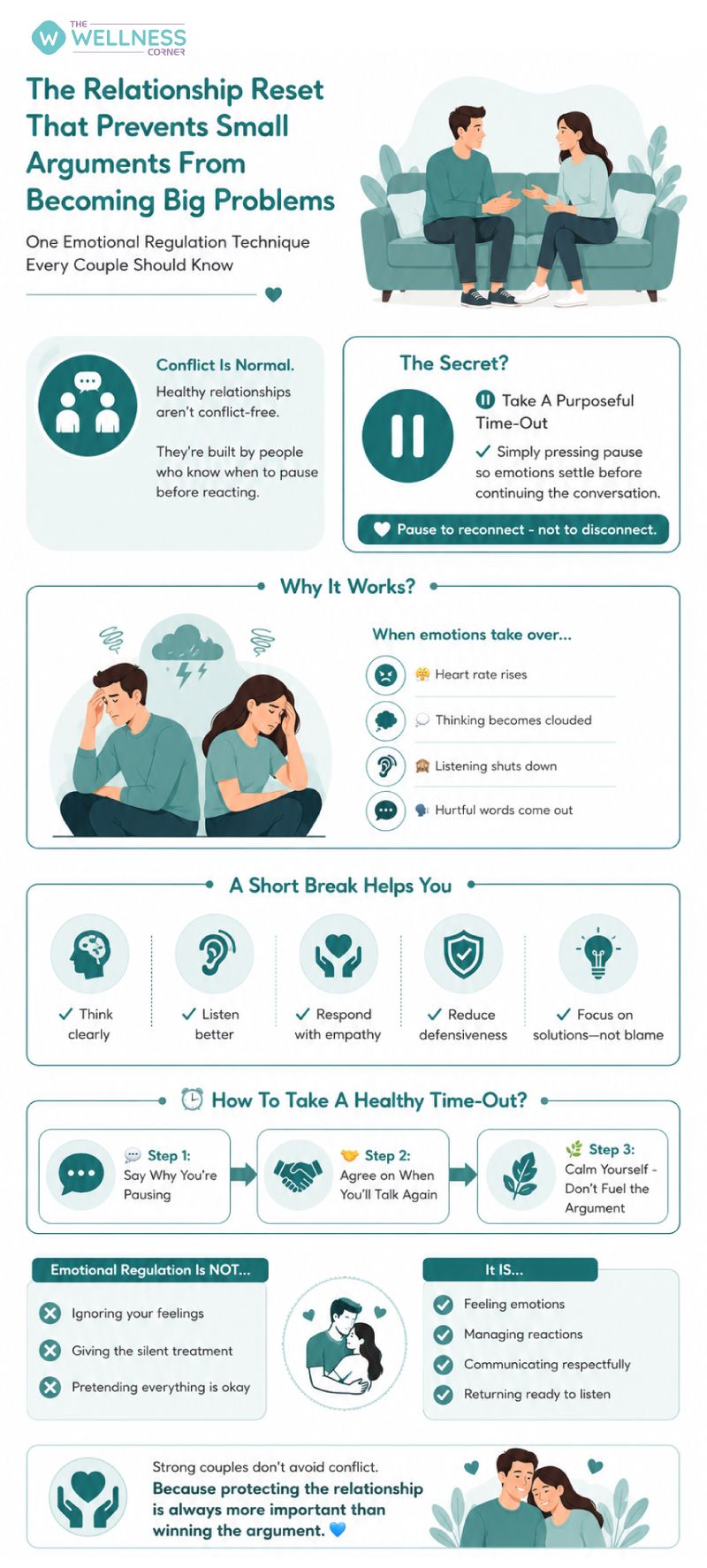
The Technique: Taking A Purposeful Time-Out
One of the most effective emotional regulation strategies for couples is taking a purposeful time-out before continuing a difficult conversation.
Unlike walking away in frustration or giving someone the silent treatment, a healthy time-out is a mutual agreement to pause the discussion when emotions become too intense.
During this break, both partners focus on calming their minds and bodies before returning to the conversation later.
This approach helps interrupt the cycle of escalating conflict and creates space for more thoughtful communication.
Why This Technique Works?
When emotions run high, the body's stress response becomes activated.
Heart rate increases, breathing becomes faster, and stress hormones prepare the body to react. During this state, it becomes more difficult to think clearly, listen carefully, or respond with patience.
Taking a short break allows the nervous system to settle, making it easier to:
- Think more rationally
- Listen without interrupting
- Express feelings respectfully
- Reduce defensive reactions
- Find practical solutions instead of assigning blame
By returning to the conversation after calming down, couples are often better able to understand each other's perspectives.

How To Take A Healthy Time-Out?
A time-out is most effective when both partners understand its purpose and agree on how to use it.
Here are a few helpful guidelines:
1. Explain Why You're Pausing
Instead of walking away abruptly, let your partner know you need a short break to calm down.
For example:
"I'm feeling overwhelmed right now. I'd like to take a 20-minute break so we can continue this conversation calmly."
This reassures your partner that you're not avoiding the issue.
Also Read: Lost The Spark? How To Strengthen Your Bond With Your Partner?
2. Set A Time To Continue
Always agree on when you'll return to the conversation.
Whether it's 20 minutes, an hour, or later that evening, setting a specific time helps maintain trust and prevents the pause from becoming avoidance.
3. Use The Break Wisely
A healthy time-out isn't an opportunity to rehearse arguments or think of better comebacks.
Instead, use the time to:
- Practice slow, deep breathing.
- Go for a short walk.
- Listen to calming music.
- Stretch or practice mindfulness.
- Reflect on your own emotions.
The goal is to return feeling calmer, not more frustrated.
Also Read - Tea Time As Me Time: Creating Space For Mindfulness And Relaxation
What Emotional Regulation Is Not?
It's common for people to mistake emotional regulation for suppressing their emotions.
They're very different.
Healthy emotional regulation means:
- Acknowledging your emotions
- Taking responsibility for your reactions
- Expressing yourself respectfully
- Remaining open to discussion
Emotional suppression involves ignoring feelings, pretending they don't exist, or refusing to communicate.
Strong relationships are built on open, honest communication, even when the discussions are difficult.
Additional Habits That Strengthen Emotional Regulation
While taking a purposeful time-out is effective, combining it with other healthy habits can make an even bigger difference.
Consider practicing these habits regularly.
- Get adequate sleep.
- Exercise consistently.
- Practice mindfulness or meditation.
- Limit excessive alcohol consumption.
- Focus on listening before responding.
- Avoid bringing up unrelated past arguments.
- Speak using "I" statements instead of accusations.
- Express appreciation regularly, not only during good times.
These habits help create an emotional environment where healthy communication becomes easier.
Also Read: Should You Be Sleepmaxxing To Boost Health & Happiness?

When Professional Support May Help?
Some relationship challenges go beyond everyday disagreements.
If arguments frequently become aggressive, communication completely breaks down, or unresolved conflicts continue affecting daily life, seeking support from a qualified mental health professional or couples therapist may be beneficial.
Professional guidance can help couples develop healthier communication patterns, improve emotional regulation skills, and better understand each other's perspectives.
Seeking help early can often prevent small issues from becoming larger relationship problems.
The Science Behind Emotional Regulation
Relationship experts have found that successful couples aren't necessarily those who argue less. Instead, they're often the ones who recover from conflict more effectively.
Emotional regulation supports this recovery by reducing impulsive reactions and encouraging thoughtful responses. As stress levels decrease, people are generally better able to empathize, solve problems collaboratively, and rebuild emotional connection after disagreements.
While no single technique can guarantee the success of every relationship, learning to regulate emotions during conflict can significantly improve the quality of communication and strengthen long-term relationship satisfaction.

The Bottom Line
Disagreements are an unavoidable part of every close relationship, but they don't have to weaken the bond between partners. Learning to pause, regulate emotions, and return to difficult conversations with a calmer mindset can transform the way conflicts are handled.
Emotional regulation isn't about avoiding uncomfortable discussions or hiding your feelings. It's about creating enough space to respond with patience, empathy, and respect instead of reacting in the heat of the moment.
Like any relationship skill, this takes practice. Over time, even small improvements in emotional regulation can lead to healthier communication, greater trust, and a stronger emotional connection between partners.
Frequently Asked Questions (FAQs)
Leave a Comment

Sign-Up Now & Unlock
₹100 Cashback
Recently Published
Related Articles



Health Checks @ Home
Service
Explore



Follow us on:


© 2026 Truworth Health Technologies Pvt. Ltd.