Habits You Can Steal From People Who Rarely Experience Burnout
1 month ago
5 minute read.

Burnout has become one of the most common workplace challenges today. Long working hours, constant notifications, endless meetings, and the pressure to always stay productive can gradually leave people feeling mentally, emotionally, and physically exhausted. Many assume burnout only affects those with demanding careers, but it can happen to students, parents, caregivers, entrepreneurs, and anyone juggling multiple responsibilities.
Interestingly, some people seem to handle heavy workloads without reaching the point of complete exhaustion. It's not because they have easier lives or unlimited energy. More often, they have developed everyday habits that help them protect their well-being before stress becomes overwhelming.
The good news is that these habits are practical and can be incorporated into almost any lifestyle. The following seven habits can help you become more resilient while lowering your chances of burnout.
Also Read: Can AI Predict Mental Burnout Before It Happens?
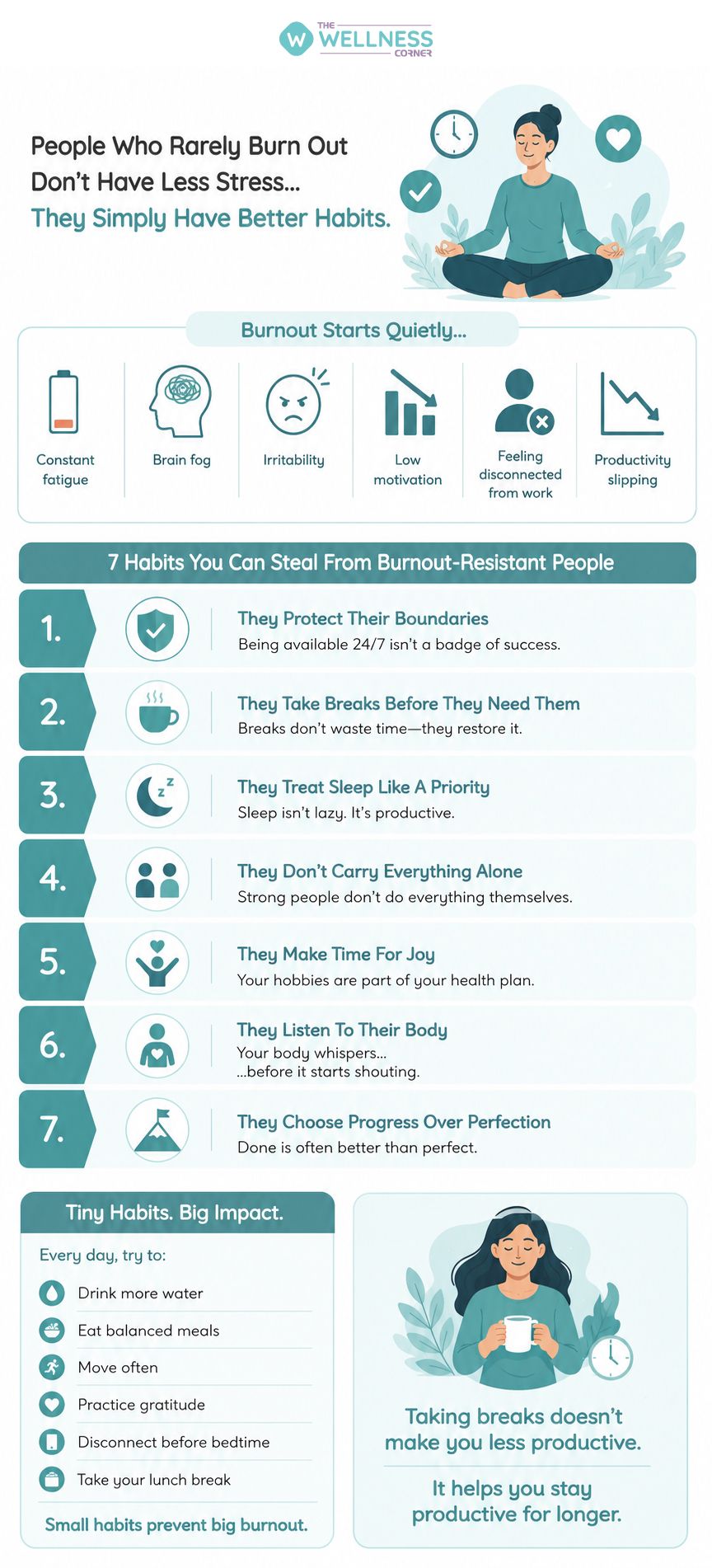
What Is Burnout?
Burnout isn't just everyday fatigue; it's a deeper state of ongoing exhaustion.
It is a state of ongoing emotional, mental, and physical exhaustion caused by prolonged stress. People experiencing burnout often notice:
- Constant fatigue
- Reduced motivation
- Difficulty concentrating
- Increased irritability
- Feeling disconnected from work or daily responsibilities
- Declining productivity
Recognizing these early signs makes it easier to take action before burnout becomes more severe.
1. They Set Clear Boundaries
One habit that consistently protects people from burnout is knowing when to stop.
People who rarely burn out understand that being constantly available does not always lead to better performance.
They establish healthy boundaries by:
- Finishing work at a reasonable time
- Limiting after-hours emails
- Protecting personal time
- Saying no to unnecessary commitments
Boundaries create space for rest, relationships, and recovery, all of which are essential for long-term productivity.

2. They Take Regular Breaks
Many people believe working continuously increases efficiency.
In reality, short breaks often improve concentration and reduce mental fatigue.
People who manage stress well usually pause throughout the day to:
- Stretch
- Walk briefly
- Drink water
- Practice deep breathing
- Step away from their screens
Even a few minutes away from work can help refresh your attention and improve overall performance.
Also Read: How To Take Breaks To Get More Done?
3. They Prioritize Sleep
Consistently getting too little sleep can make it harder to manage stress and perform at your best mentally.
People who avoid burnout generally treat sleep as an essential part of their routine rather than an optional luxury.
Good sleep supports:
- Memory
- Decision-making
- Mood regulation
- Physical recovery
- Emotional resilience
Maintaining a regular sleep schedule is one of the simplest ways to support mental well-being.

4. They Don't Try To Do Everything Alone
People who rarely burn out understand the value of asking for help.
Whether at work or home, they recognize that sharing responsibilities is a sign of good judgment rather than weakness.
They are comfortable:
- Delegating tasks
- Collaborating with colleagues
- Asking questions
- Seeking professional guidance when needed
Strong support systems reduce unnecessary pressure and make difficult situations easier to manage.
5. They Make Time For Activities They Enjoy
Life cannot revolve entirely around responsibilities.
People who maintain their well-being intentionally create time for hobbies and activities that help them recharge.
This could include:
- Reading
- Gardening
- Music
- Painting
- Sports
- Cooking
- Spending time with family and friends
Engaging in enjoyable activities provides a mental reset and helps maintain emotional balance.
Also Read: Does Listening To Music Boost Productivity?

6. They Listen To Their Bodies
One common mistake many people make is ignoring early warning signs of stress.
People who avoid burnout pay attention to signals such as:
- Difficulty concentrating
- Persistent fatigue
- Frequent headaches
- Poor sleep
- Increased irritability
- Loss of motivation
Instead of pushing through these symptoms, they slow down, rest, or adjust their workload before stress becomes overwhelming.
Self-awareness allows them to respond early rather than waiting until exhaustion takes over.
7. They Aim For Consistent Progress, Not Perfection
Perfectionism can quietly contribute to burnout.
People who cope well with stress know that aiming for perfection isn't always necessary.
Rather than aiming for flawless results every time, they focus on:
- Continuous improvement
- Realistic expectations
- Learning from mistakes
- Celebrating small achievements
Adopting this perspective can reduce unnecessary stress and encourage continuous development.
Also Read: The Vice Called Perfectionism

Small Daily Habits That Make A Difference
Small actions repeated consistently can be more effective in reducing burnout than major life changes.
Simple habits include:
- Drinking enough water
- Moving regularly throughout the day
- Eating balanced meals
- Taking lunch breaks
- Practicing gratitude
- Limiting unnecessary screen time
- Disconnecting from work before bedtime
Individually these actions may seem small, but together they help create a healthier routine.
Why Burnout Prevention Matters?
Ignoring chronic stress doesn't just affect productivity.
Burnout can influence:
- Physical health
- Mental well-being
- Relationships
- Job satisfaction
- Overall quality of life
Taking preventive steps early is often much easier than recovering after reaching complete exhaustion.
Building sustainable routines benefits both personal happiness and professional success.
Also Read: 7 Signs You Are In A Secure Relationship

Remember That Rest Is Productive
Many people view rest as something that has to be earned.
However, recovery is an essential part of maintaining performance.
Just as athletes schedule recovery between training sessions, our minds also require regular opportunities to recharge.
Taking care of yourself is not avoiding responsibility. It helps you remain capable of meeting those responsibilities over the long term.
Building A More Sustainable Lifestyle
Burnout doesn't happen overnight, and preventing it usually doesn't require dramatic changes.
Protecting your well-being starts with paying attention to your daily habits.
Setting boundaries, prioritizing sleep, taking regular breaks, asking for support, making time for enjoyable activities, and letting go of perfectionism can all contribute to a healthier and more balanced life.
The goal isn't to eliminate stress completely. Instead, it's about developing habits that help you recover, adapt, and continue moving forward without sacrificing your health.
Frequently Asked Questions
Leave a Comment

Sign-Up Now & Unlock
₹100 Cashback
Subscribe to our Newsletter!
Get a weekly dose of wellness tips delivered straight to your inbox.
Recently Published
Related Articles


Health Checks @ Home
Service
Explore



Follow us on:


© 2026 Truworth Health Technologies Pvt. Ltd.